%201.svg)
Synthetic Data vs. Masked Data in Testing

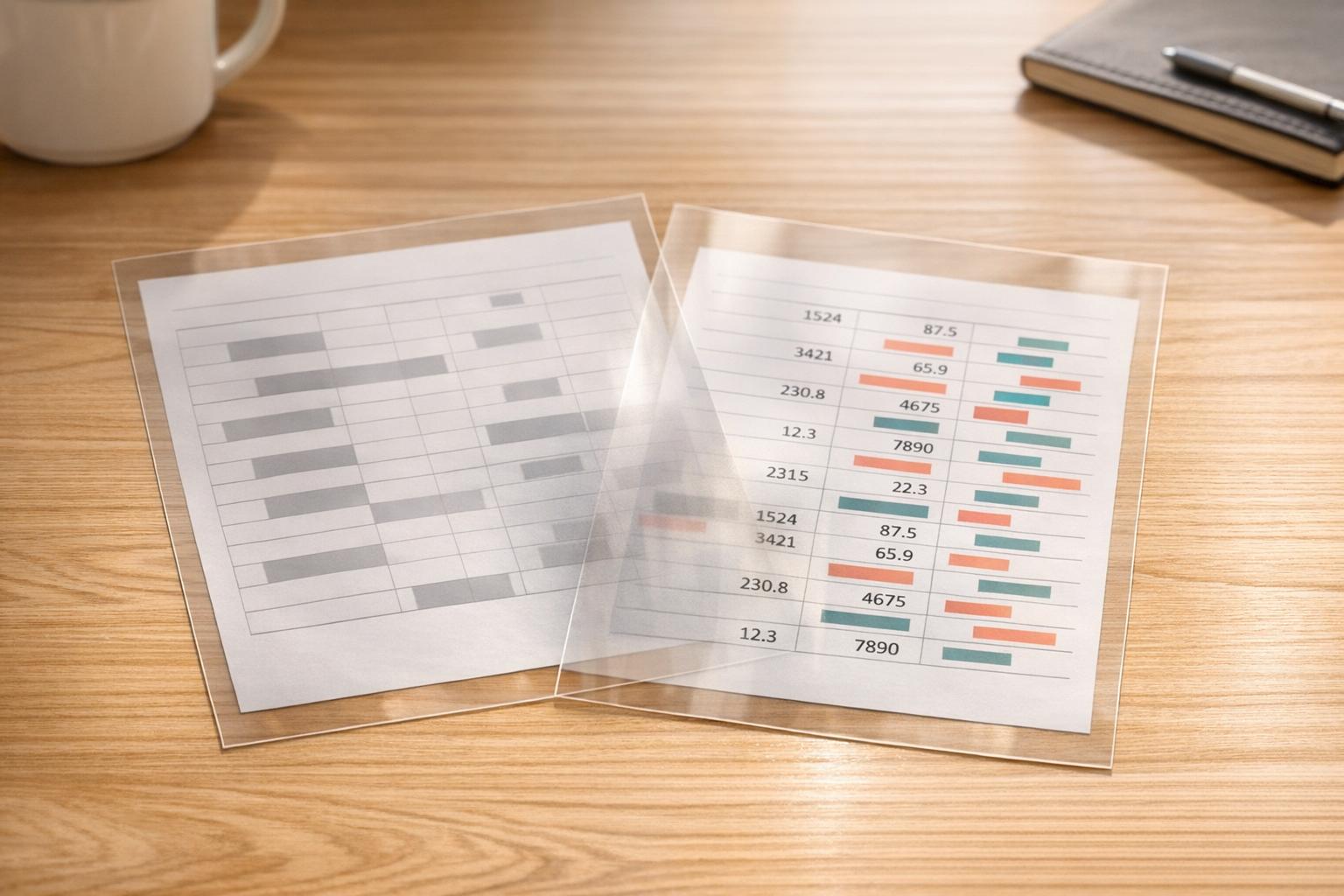
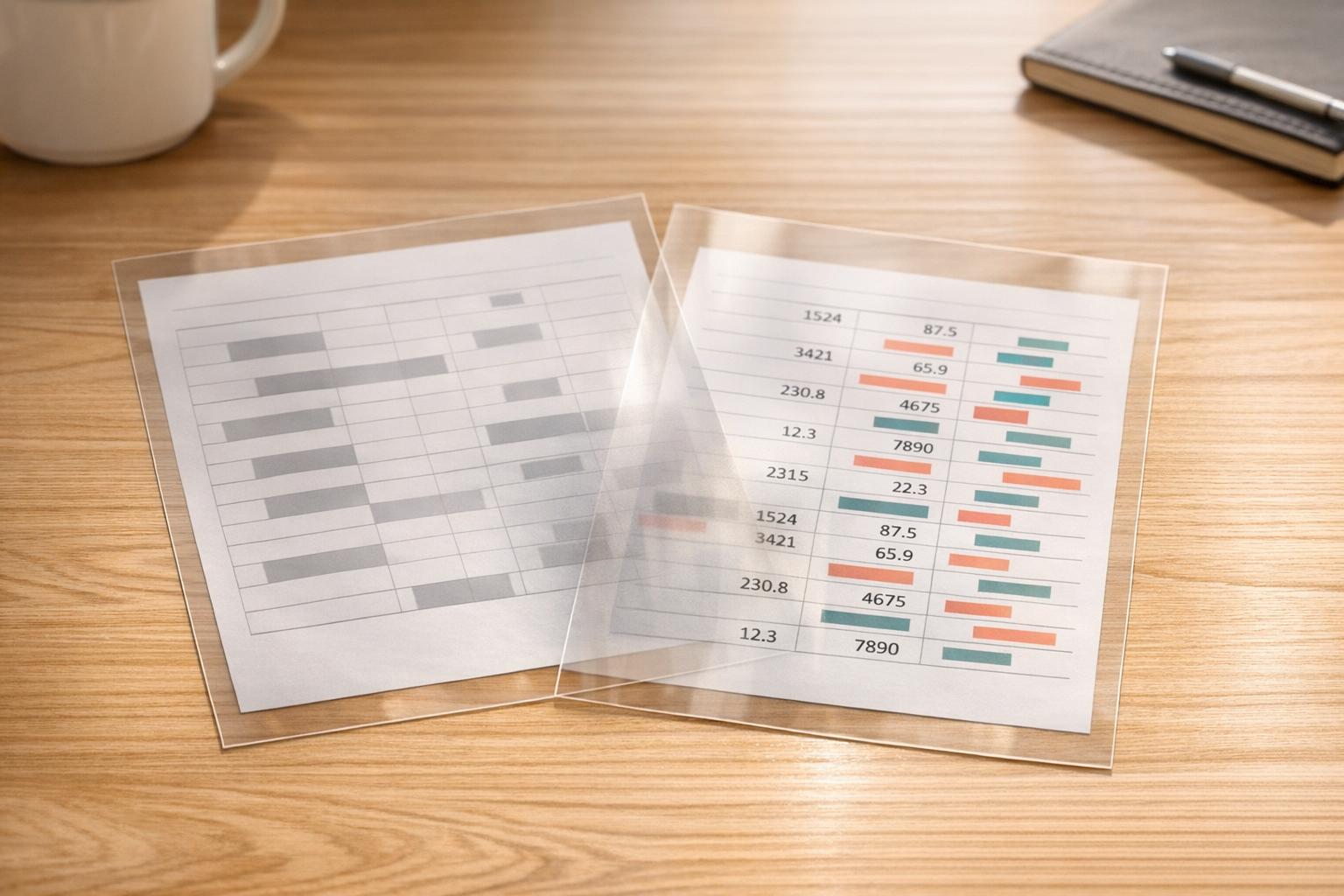
Testing software often involves balancing realism and privacy. Two popular approaches - synthetic data and masked data - offer unique solutions to this challenge. Here's a quick breakdown:
- Synthetic Data: Generated using AI for production-like test data creation to mimic real data patterns without containing actual user information. It eliminates privacy risks, scales easily, and supports edge-case testing but may miss subtle business rules.
- Masked Data: Uses real production data with sensitive details obscured. It retains structural accuracy and real-world patterns but carries privacy risks and is limited by the size of the original dataset.
Key Takeaway: Synthetic data is ideal for speed, scalability, and privacy, while masked data works best for maintaining accuracy in legacy systems or user acceptance testing. Combining both methods often delivers the best results.
Quick Comparison
| Aspect | Synthetic Data | Masked Data |
|---|---|---|
| Data Origin | Generated from algorithms | Based on production data |
| Privacy Risk | None | Moderate |
| Scalability | Unlimited | Limited to production data size |
| Best Use Cases | Edge-case testing, AI/ML training, stress tests | Functional testing, compliance checks, debugging |
| Setup Complexity | High (requires AI training) | Moderate (requires masking rules) |
Pro Tip: Use synthetic data for 80% of testing (e.g., edge cases, performance) and masked data for the remaining 20% (e.g., final validations). This hybrid approach can boost efficiency and ensure thorough testing.

Synthetic Data vs Masked Data: Complete Comparison for Software Testing
Main Differences Between Synthetic Data and Masked Data
Data Source Differences
The key distinction lies in how the data is created. Synthetic data is entirely generated using mathematical models, algorithms, or AI, meaning it doesn't involve any real production records. Instead, it mimics statistical patterns of real data without ever touching actual records.
On the other hand, masked data begins with real production datasets. It uses transformation techniques to obscure or replace sensitive information. For instance, names might be shuffled, ID numbers swapped, or email addresses modified. Despite these changes, the original structure of the data remains intact. This fundamental difference influences how each method is used in testing scenarios. Let’s dive into how privacy plays a role in choosing between the two.
Privacy Considerations
Privacy risks set these methods apart. Synthetic data carries no privacy risk because it doesn’t include any original sensitive or personally identifiable information (PII). Since no real individual’s data is involved, re-identification is impossible.
Masked data, however, poses a moderate privacy risk, especially if the masking process isn't thorough. Weak masking techniques could leave the data vulnerable to advanced attacks that might reverse the transformations and re-identify individuals. According to K2View, synthetic data eliminates compliance risks entirely, making it a preferred choice for industries like healthcare, where privacy is critical.
Comparison Table
| Aspect | Synthetic Data | Masked Data |
|---|---|---|
| Data Origin | Generated from models and algorithms | Based on production data |
| Privacy Risk | None - no real PII involved | Moderate - depends on masking effectiveness |
| Scalability | High - can generate custom volumes | Limited to the size of the original dataset |
| Recommended Use Cases | Great for edge cases, AI/ML training, and stress testing | Ideal for functional testing, compliance checks, and debugging |
sbb-itb-7ae2cb2
Pros and Cons of Synthetic Data
Benefits of Synthetic Data
Synthetic data offers a significant advantage: absolute privacy assurance. Since it contains no real personal information, the risk of re-identification is completely eliminated. Alex Hayward, Co-Founder of GoMask.ai, explains:
"The mathematical advantage: Zero real customer data equals zero breach risk - a certainty that production data masking cannot guarantee regardless of transformation sophistication".
This makes synthetic data naturally compliant with regulations like GDPR, CCPA, and HIPAA.
Another major perk is its unlimited scalability. With synthetic data, you can generate datasets far larger than your production data. For instance, an e-commerce company created 10 million synthetic user profiles to simulate Black Friday traffic, avoiding $12 million in potential downtime losses when their original 2-million-record database couldn’t handle the load. Additionally, organizations using synthetic test data report deploying 93% faster compared to those relying on traditional data masking.
Synthetic data also shines in edge case testing. Testers can create datasets with extreme test scenarios, boundary values, or rare failures that may never have appeared in production. For example, a healthcare platform used AI-generated synthetic patient data to bypass HIPAA restrictions, boosting their release speed by 400% - from monthly to weekly deployments - and delivering 28 new features compared to just 8 previously. On top of this, synthetic test data provides an average ROI of 347%, far outpacing traditional masking methods.
While synthetic data offers these advantages, it’s not without its challenges.
Drawbacks of Synthetic Data
One of the biggest hurdles is the realism gap. Synthetic data can sometimes fail to capture subtle or undocumented business rules that exist in real-world production data. For example, an insurance company discovered that their synthetic data overlooked 14 nuanced rule interactions, resulting in $2.3 million in processing errors. Similarly, a telecommunications company’s synthetic data failed to replicate 47 legacy rate structures, impacting 3% of their customers and risking $18 million in annual revenue.
Another challenge is the complexity of setup. Creating high-quality synthetic data requires precise rule definitions and robust AI training. If the underlying models are flawed, the data may carry or even amplify biases. Generating synthetic data can also be computationally expensive, especially for complex and structured datasets. Additionally, synthetic data often struggles to replicate the "messiness" of legacy systems - those quirks and dependencies that emerge over decades of real-world use.
Pros and Cons Table
| Advantages | Disadvantages |
|---|---|
| Zero Privacy Risk: No real PII, ensuring GDPR/HIPAA compliance | Realism Limitations: May miss undocumented business rule interactions |
| Edge Case Creation: Enables testing with extreme or negative scenarios | Complex Setup: Requires detailed rule definitions and AI training |
| Instant Provisioning: Removes delays for database refreshes | Bias Risk: Can replicate or introduce biases in the data generation process |
| Unlimited Scalability: Supports large-scale load and performance testing | Legacy Gaps: Struggles to replicate decades of organic data evolution in legacy systems |
| Cost Efficiency: Cuts long-term infrastructure costs by 67% | Computational Intensity: High-fidelity generation can demand significant resources |
These pros and cons highlight the dual nature of synthetic data, helping organizations determine how it fits into their test data management strategies.
Pros and Cons of Masked Data
Benefits of Masked Data
One of the biggest strengths of masked data lies in its ability to maintain structural accuracy. It mirrors the exact format, schema, and relationships of your production database, ensuring that even the most complex multi-table setups remain intact. This makes it incredibly useful for testing older systems with deeply embedded business rules.
Another standout feature is its real-world authenticity. Since masked data is derived from actual customer interactions, it retains the nuanced correlations and patterns that synthetic data often struggles to replicate. For example, credit scoring models, which rely on hundreds of interconnected variables, benefit greatly from this level of detail.
When it comes to User Acceptance Testing (UAT), masked data offers a sense of familiarity for business users. They can interact with data that mirrors real-world scenarios, boosting their confidence in the system. This is a critical step when building a structured test plan for complex software projects. Additionally, masked data aligns seamlessly with existing database performance patterns and indexing. This makes it particularly valuable in compliance-heavy environments where the data must remain structurally identical to production.
Drawbacks of Masked Data
However, masked data isn't without its challenges. One major issue is the risk of re-identification. Unlike synthetic data, which guarantees zero exposure of personal information, masked data is still vulnerable. Sensitive details can sometimes be pieced together by analyzing correlations within the data or combining it with external datasets. This is a serious concern, especially with the average cost of data breaches now reaching $4.88 million per incident.
James Walker, Co-Founder of GoMask.ai, highlights another limitation, which he calls the "Happy Path" trap:
"If you only test with masked production data, you are only testing against scenarios that have already succeeded. You aren't testing for the failures that haven't happened yet".
This means that masked data tends to focus on transactions that have already worked, potentially overlooking edge cases and unusual failures that haven't yet occurred in production.
Another drawback is the time lag in provisioning. Refreshing databases for testing can take anywhere from 3 to 5 days, significantly slowing down modern DevOps workflows. In contrast, organizations using synthetic data report deployment speeds that are 93% faster. Additionally, masked data is limited by the size of your production database. If your production environment only has 100,000 records, it becomes difficult to simulate scenarios involving millions of users.
Lastly, storage costs are a growing concern. With enterprise database sizes projected to grow from 2.3TB in 2020 to 18.7TB by 2024, maintaining multiple masked copies can become prohibitively expensive. Despite these hurdles, about 67% of companies continue to rely on traditional data masking methods.
Pros and Cons Table
| Advantages | Disadvantages |
|---|---|
| Structural Accuracy: Retains the format, schema, and relationships of production databases | Re-identification Risk: Vulnerable to privacy breaches despite masking efforts |
| Real-World Patterns: Captures authentic business logic and legacy system intricacies | "Happy Path" Bias: Misses edge cases and untested failure scenarios |
| Familiarity for UAT: Business users see recognizable patterns, boosting confidence | Slow Provisioning: Multi-day database refresh cycles hinder productivity |
| Regulatory Compliance: Meets requirements for HIPAA, PCI DSS, and SOX while preserving performance | Limited Scalability: Restricted by the size of production data |
| High Storage Costs: Expensive to maintain multiple masked copies |
When to Use Synthetic Data vs. Masked Data
Best Use Cases for Synthetic Data
Synthetic data is a go-to option when speed, scalability, or privacy are top priorities. For instance, when new features lack production data, synthetic data can quickly bridge the gap. Developers can generate test data in minutes, rather than waiting days for a database refresh, and seamlessly integrate it into AI-driven CI/CD pipelines.
Performance testing is another area where synthetic data shines. An e-commerce company, for example, simulated 10 million concurrent users - far beyond their actual production size - using synthetic data. This approach helped prevent $12 million in potential downtime. Achieving such a scale with masked data alone would have been nearly impossible.
Synthetic data is also invaluable for edge case and negative testing. It allows teams to push systems to their limits with invalid inputs, extreme boundary conditions, or rare traffic spikes, such as a sudden 1,000× increase in activity.
For privacy-sensitive environments, synthetic data offers a major advantage: it contains no real personally identifiable information (PII). In one case, a healthcare platform transitioned to AI-generated synthetic data in March 2026 to navigate HIPAA restrictions. This shift boosted their release speed by 400%, cutting deployment cycles from monthly to weekly, and saved $1.7 million by eliminating the need for PHI access infrastructure. Synthetic data is also an effective solution for cross-border transfers under GDPR or within zero-trust security frameworks, as it eliminates the risk of data breaches.
However, when maintaining structural accuracy and legacy business logic is critical, masked data becomes the better choice.
Best Use Cases for Masked Data
Masked data is indispensable for systems that rely on intricate business logic developed over years. Applications like credit scoring, insurance risk modeling, and legacy mainframes depend on thousands of interconnected variables that synthetic data often cannot replicate accurately.
It’s also the preferred choice for User Acceptance Testing (UAT). Business stakeholders feel more confident when they see familiar transaction patterns and workflows that mirror real-world scenarios. Masked data makes it easier for non-technical users to identify issues and approve releases.
When it comes to database optimization and performance tuning, masked data is critical. The complexity of real production data is essential for tasks like optimizing queries, improving indexing, and addressing data distribution issues. Synthetic data often lacks the nuances needed to uncover these production bottlenecks.
Combining Both Approaches
The smartest strategies often combine synthetic and masked data to take advantage of their respective strengths. Many high-performing organizations follow the 80/20 rule: they use synthetic data for 80% of development tasks, such as unit tests, integration tests, and automated builds, while reserving masked data for the final 20%, including UAT and critical pre-release validations.
A global investment bank adopted this hybrid approach in March 2026. They used synthetic data for daily development tasks and masked data for SOX compliance checks. This strategy reduced compliance testing cycles from six weeks to just three days - a 2,033% improvement - and saved $3.2 million annually. By blending the scalability of synthetic data with the accuracy and regulatory assurance of masked data, they achieved both speed and confidence in their processes.
Cost and Scalability Comparison
Cost Comparison
Both synthetic data and masked data require some upfront investment for tools, setup, and designing processes. However, their ongoing costs vary quite a bit. With data masking, expenses grow alongside production database sizes. For example, enterprise databases have ballooned from an average size of 2.3 TB in 2020 to a projected 18.7 TB by 2024, making masking a pricier option over time. On the flip side, synthetic data offers a more cost-efficient alternative. Once the synthetic data generator is built, producing additional data becomes much cheaper. Companies using synthetic data have reported cutting infrastructure costs by 67%, reducing operational overhead by 73%, and achieving an average return on investment (ROI) of 347% compared to masking.
Masked data also comes with hidden costs. It requires storing full-scale production copies, frequent updates to reflect schema changes, and additional scripts for testers to generate test cases and extract specific configurations. These processes can lead to delays - such as the typical 3–5 days needed for database refreshes - which can cost enterprises up to $4.3 million annually in lost productivity.
Cost aside, the ability to generate data quickly and in large volumes further separates these two methods.
Scalability Comparison
Masked data is inherently tied to the size of production databases. For instance, a system with 2 million user accounts sets a hard limit on how much test data can be created. Synthetic data, however, removes this restriction, allowing for the generation of tens of millions - or even billions - of records. This capability makes it perfect for stress-testing systems beyond current operational limits.
Another advantage is speed. Masked data refresh cycles typically take 3–5 days, while synthetic data can be generated in just minutes, enabling deployments that are 93% faster. This speed also supports testing scenarios 11 times more frequently. As databases grow larger and privacy regulations increase - from just 3 jurisdictions in 2020 to an expected 47 by 2026 - the scalability offered by synthetic data becomes even more critical. It not only addresses cost concerns but also meets the growing demand for faster, larger-scale testing in today’s data-driven world.
Comparison Table
| Factor | Masked Data | Synthetic Data |
|---|---|---|
| Initial Setup | Moderate (tooling + rule definition) | Moderate (tooling + modeling) |
| Long-term Costs | High; increase with data volume | Low; decrease as volume grows |
| Storage Needs | High (requires multiple full-size copies) | Low (generated on demand) |
| Provisioning Time | 3–5 days (refresh cycles) | Minutes (automated) |
| Scalability Limit | Limited to production data size | Unlimited |
| Maintenance | High (updating rules for schema changes) | Low (flexible models) |
| Average ROI | Baseline | 347% compared to masking |
Test Data Management Best Practices
Use Multiple Data Sources
Effective test data management thrives on diversity. By combining synthetic and masked data, teams can address a wide range of testing scenarios. A practical guideline is the 80/20 strategy: allocate synthetic data for 80% of testing needs - such as unit tests, integration tests, and automated CI/CD pipelines - while reserving masked production data for the remaining 20%, including user acceptance testing and final pre-release validation, where real-world complexity is essential.
This method capitalizes on the strengths of both synthetic and masked data. For instance, hybrid pipelines can use minimal real data to establish a reliable baseline while scaling coverage with synthetic data. This approach maintains realism without compromising compliance. Synthetic data also shines in simulating extreme conditions, like testing system limits by scaling from 100,000 users to 10 million, a scenario masked production data often cannot replicate. While masked data reflects past successes, synthetic data helps uncover potential failures before they happen.
Maintain Regulatory Compliance
Privacy regulations are non-negotiable. With GDPR-related fines surpassing €1.2 billion in 2024 and an average of 335 breach notifications daily across the EU, compliance is both a legal and financial priority. Synthetic data is a strong choice here - it contains no personally identifiable information (PII), sidestepping GDPR obligations entirely. In contrast, pseudonymization or masking still carries full regulatory requirements.
To meet compliance standards, implement automated audit trails to log every data transformation, access event, and expiration, addressing GDPR's "accountability principle". Set default data retention policies, such as a 90-day automatic expiration, to adhere to storage limitation rules. If pseudonymization is used, ensure encryption keys are stored separately, with access tightly controlled and formal management procedures in place. Treat all test environments as Zero Trust zones, prioritizing synthetic or fully anonymized data. With these safeguards in place, combining automation with human oversight ensures both compliance and quality.
Combine Automation with Human Oversight
Balancing automation with human review is key to a strong test data strategy. Automation speeds up testing, while human oversight ensures accuracy. For example, organizations using automated synthetic test data can deploy 93% faster than those relying on manual production data masking, enabling 11 times more frequent deployments. However, over-reliance on automation risks missing nuanced business rules or creating tests that only cover "Happy Path" scenarios - those already proven successful.
The solution lies in integrating automation with strategic human input. Shift-Left Integration embeds data generation directly into the development lifecycle, using tools like CI/CD pipelines, VS Code, and Git. This allows developers to provision data in minutes rather than waiting 3–5 days.
Platforms like Ranger illustrate this balance by combining AI-driven automation with human oversight for thorough QA testing. With integrations for tools like Slack and GitHub, these platforms automate test creation and maintenance while ensuring results are fast and accurate. This hybrid approach delivers the speed demanded by modern DevOps while maintaining the precision needed for intricate business scenarios.
Webinar "Data Masking vs Synthetic Data" | DATPROF
Conclusion
Deciding between synthetic data and masked data depends on what your testing goals demand. Masked data is ideal for validating intricate business rules and ensuring stakeholder confidence during User Acceptance Testing (UAT). On the other hand, synthetic data shines in performance testing, handling edge cases, and enabling quick provisioning without worrying about privacy risks.
Synthetic data offers speed, scalability, and privacy, while masked data provides the real-world accuracy needed for final validations. Combining these strengths allows teams to achieve a balance between cutting-edge testing and dependable results.
A hybrid approach often works best. Many successful teams follow the 80/20 rule: they rely on synthetic data for 80% of routine development and automated testing, while using masked production data for the remaining 20% of critical validation tasks. This mix helps software teams stay agile while maintaining high-quality standards.
As mentioned earlier, tailoring your test data strategy to your development phase and regulatory needs is essential. Leveraging synthetic data for rapid scaling and masked data for accurate validation ensures a well-rounded testing process that supports both speed and reliability.
Tools like Ranger simplify this approach by offering AI-driven testing solutions that seamlessly integrate synthetic and masked data. These platforms make it easier for teams to streamline their testing workflows and achieve consistent results.
FAQs
How do I choose synthetic vs. masked data for my tests?
When deciding between synthetic data and masked data, it's all about what your testing requires.
- Synthetic data is created from scratch and isn’t linked to actual users. This makes it perfect for testing edge cases, scaling systems, or handling sensitive situations without privacy concerns.
- Masked data, on the other hand, comes from real production data but with sensitive information hidden or altered. It provides realistic patterns, which can be great for certain tests, though it may not cover every scenario as broadly as synthetic data.
Think about what matters more for your needs: flexibility and broad coverage (synthetic) or realism and regulatory compliance (masked). That will guide your choice.
Can masked data still expose sensitive user information?
When data masking is incomplete or incorrectly applied, sensitive information can still be exposed. This oversight can lead to data leaks, potentially revealing personal details like PII (Personally Identifiable Information), financial records, or even health-related data. To prevent such risks, it's essential to implement masking techniques effectively, ensuring that sensitive data stays secure even if a breach or mishandling occurs. However, going too far with masking can limit the data's usefulness, making it critical to strike the right balance.
How do teams combine synthetic and masked data in CI/CD?
Teams integrate synthetic data and masked data into CI/CD pipelines to improve testing while safeguarding sensitive information. Masked data starts with real datasets, but sensitive details are altered or hidden. This keeps the data realistic while ensuring privacy. On the other hand, synthetic data is entirely generated, either from scratch or using models, to simulate diverse and risk-free scenarios.
By combining these two approaches, teams achieve more thorough testing. Masked data is ideal for routine validations, while synthetic data allows exploration of edge cases. Together, they help enhance software quality and maintain compliance throughout the CI/CD process.
Related Blog Posts
Stop babysitting your coding agents. Use Ranger
%201%20(1).svg)
More signals, less noise, faster launches
Let Ranger be your guide to sustainable QA testing.

.png)