%201.svg)
How Synthetic Data Improves QA Automation

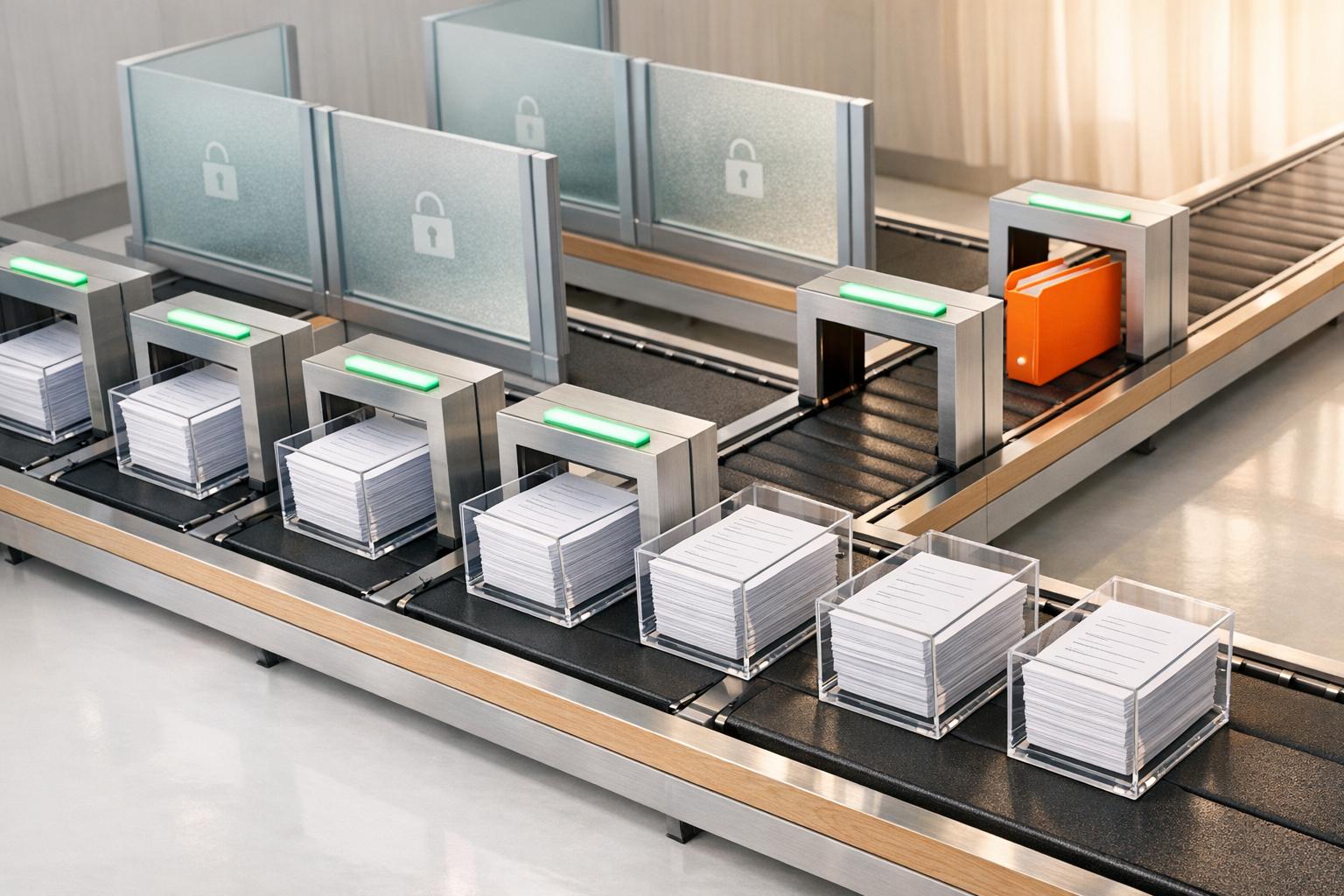
Synthetic data is changing the game for QA automation. Here's why:
- Faster Testing: Generate test data in minutes instead of waiting days for production data.
- Privacy-Safe: No personal information means no compliance risks like GDPR fines.
- Better Edge Case Coverage: Simulate rare, extreme scenarios that production data can't provide.
- Cost Savings: Companies report cutting testing expenses by up to 70%.
- AI Integration: Works seamlessly with modern CI/CD pipelines and AI-driven tools.
By 2026, 75% of businesses will use generative AI to create synthetic customer data, according to Gartner. This shift is enabling QA teams to test smarter, faster, and more securely.
Synthetic data not only accelerates testing but also ensures privacy and reduces costs, making it a powerful tool for modern software development.
Testing AI Agents With Synthetic Data: Build Robust Evaluations Before You Ship
How Synthetic Data Speeds Up QA Processes
Traditional methods of preparing data for testing often slow down development cycles. Extracting and anonymizing production data can take days, leaving teams waiting and delaying feature releases. Synthetic data offers a faster alternative, generating test datasets in just minutes. Here's how this approach is revolutionizing QA processes.
Faster Test Data Generation
Synthetic data platforms leverage APIs to create datasets on demand, eliminating the need for manual extraction and anonymization. This means testers can generate tailored datasets in minutes, bypassing the time-consuming process of relying on database administrators to prepare production data for testing.
"Traditional approaches to test data management often rely on production data... access to real data is often restricted due to security and compliance concerns, delaying testing cycles."
- Chiara Colombi, Director of Product Marketing, Tonic.ai
With synthetic data, preparation time shrinks dramatically - from days to minutes. This allows teams to refresh test environments instantly, enabling rapid prototyping even when production data is unavailable.
Streamlining Iterations in QA Automation
The benefits of synthetic data extend beyond speed. By integrating synthetic data generation into CI/CD pipelines, test environments can refresh automatically with relevant datasets. This eliminates manual delays and reduces bottlenecks that can consume up to 30% of development time.
Synthetic datasets also enable concurrent testing, which speeds up feedback loops and significantly cuts development costs - by as much as 70%. This seamless integration ensures that QA workflows become faster, more accurate, and scalable, meeting the demands of modern testing practices.
Improving Accuracy and Reducing Bias with Synthetic Data
Real-world datasets often carry hidden biases that can compromise the accuracy of quality assurance (QA) processes. These datasets might underrepresent certain groups, reflect historical prejudices, or lack coverage for rare scenarios. Synthetic data offers a solution by creating datasets that are more balanced and diverse, helping to eliminate discriminatory patterns and improving the reliability of testing.
Balanced and Bias-Free Datasets
Synthetic data gives QA teams the ability to address imbalances found in real-world data. Instead of perpetuating flawed historical patterns - like gender-biased hiring practices or skewed demographic representation - synthetic datasets can be designed to reflect fairness. For example, research on CPRD datasets revealed that synthetic data reduced bias by 15–20% and improved precision by 10–12%.
"Synthetic data generation helps reduce algorithmic bias by creating balanced, diverse training datasets that eliminate discriminatory patterns present in real-world data."
- Edwin Kooistra, BlueGen AI
This approach works by oversampling underrepresented groups and correcting biased relationships within the data. Studies on bias mitigation have shown that methods like Learning Fair Representation (LFR) can increase fairness by 62% and reduce Statistical Parity Difference by 93%. Additionally, QA teams can create multiple versions of datasets with varying levels of bias to test how systems handle different fairness scenarios. Balanced datasets also improve the ability to detect rare errors, which might otherwise go unnoticed.
Error Detection in Edge Cases
Real-world data often fails to capture rare or critical events. Synthetic data bridges this gap by simulating these uncommon scenarios. For instance, combining real and synthetic data in machine vision testing improved precision from 77.46% to 82.56% and increased Mean Average Precision from 64.50% to 70.37%. Similarly, Betterdata’s programmable synthetic data platform demonstrated precision rate improvements of up to 5% by targeting misclassified samples.
This capability is especially crucial for testing autonomous systems and medical devices, where rare failures can have serious consequences. Synthetic data enables QA teams to simulate specific scenarios, such as rare drug interactions or extreme weather events, that might take years to naturally occur. This ensures that potential errors are identified and resolved before systems are deployed in real-world environments.
Scalability and Cost Efficiency in QA with Synthetic Data
Large-scale software projects often wrestle with a tricky problem: how to test thoroughly without blowing the budget or waiting forever for the right data. Synthetic data offers an elegant solution, delivering unlimited test scenarios on demand while keeping costs in check.
Unlimited Data for Testing Coverage
Traditional testing is bound by the limits of production datasets. Synthetic data breaks this barrier, letting teams generate millions of test cases in just minutes. QA environments can refresh instantly, giving every team member access to isolated datasets without the hassle of coordinating limited resources. Plus, advanced techniques ensure that relational integrity - like matching addresses to shipping zones - remains intact across systems.
This flexibility is a game-changer for simulating rare scenarios, such as extreme fraud patterns or hazardous driving conditions, which may never show up in production logs. By 2030, experts predict synthetic data will surpass real data for training AI models. With this expanded testing capability, teams can achieve broader coverage while cutting costs.
Cost Savings Compared to Actual Data
Synthetic data doesn’t just expand testing - it also slashes expenses. For instance, one airline saved 73% on testing costs, while a financial services company cut theirs by 72%. By 2026, organizations could reduce data-related expenses by up to 70% through synthetic data adoption.
Here’s how these savings stack up. Synthetic data eliminates the need for pricey data masking tools, trims storage costs by avoiding multiple test copies, and reduces the manual effort involved in collecting and annotating real-world data. For example, generating a synthetic image costs as little as $0.06, compared to $6.00 for manual labeling. QA engineers also save up to 46% of their time by skipping the complex management of real-world datasets.
Compliance is another bonus. With GDPR fines averaging $20 million per incident, synthetic data - free of personally identifiable information (PII) - removes legal risks and enables secure, cross-border data sharing. As Cogent Infotech puts it:
"Synthetic data sits at the intersection of cost, speed, and compliance."
- Cogent Infotech
Platforms like Ranger are already integrating synthetic data into AI-driven QA workflows, giving teams the tools they need to scale testing, cut costs, and stay compliant - all while accelerating bug detection and feature delivery.
sbb-itb-7ae2cb2
Applications of Synthetic Data in QA
Synthetic data has become a game-changer in quality assurance (QA), offering solutions for privacy compliance, rare-scenario testing, and seamless integration with AI-powered tools. These applications not only save time but also address critical challenges in modern testing environments.
Privacy-Compliant Testing
Testing with real customer data can lead to serious legal and ethical issues. Synthetic data solves this by creating artificial datasets that mimic real-world patterns without including any actual personal information. This approach ensures compliance with regulations like GDPR and HIPAA, allowing teams to test safely and confidently.
Take J.P. Morgan, for example. In 2024, the company used synthetic data to enhance its fraud detection models. Since genuine fraudulent transactions were scarce in their production data, synthetic examples were generated to train their AI systems more effectively. Techniques like differential privacy were used to add "noise" to the data, making it impossible to reverse-engineer synthetic records back to real individuals.
Simulation of Rare Scenarios
Real-world data often falls short when it comes to rare or extreme cases. Scenarios like severe weather, unusual fraud patterns, or system failures under stress are hard to capture but critical for robust testing. Synthetic data bridges this gap by creating scenarios that would otherwise be too costly, risky, or impractical to replicate.
In April 2023, Applied Intuition explored this in a case study on traffic sign classification for autonomous vehicles. They used synthetic datasets to simulate conditions like poor lighting, extreme weather, and partial obstructions. The results were impressive: a model trained on synthetic data combined with just 10 real images per class performed as well as a model trained on 100 real images per class, cutting the need for labeled real-world data by 90%.
Similarly, in January 2026, LambdaTest's TestMu AI team used ChatGPT 3.5 to stress-test a Roman numeral calculator. The AI generated extreme cases - like strings of 1,000 "I"s or "M"s - to reveal flaws in exception handling. Developer Blake Link noted a 90% reduction in boilerplate code through these AI-driven workflows. AI also caught overlapping age brackets in insurance requirements, preventing logic errors before they reached production. Today, 53% of organizations cite edge case testing as their main reason for using synthetic data.
This ability to simulate rare scenarios naturally aligns with AI-driven workflows, further accelerating test automation.
Integration with AI-Driven QA Tools
Modern QA tools are embracing synthetic data, enabling teams to generate test cases on demand and integrate them directly into their workflows. For instance, UiPath Autopilot allows QA teams to use natural language prompts to create synthetic test data that seamlessly integrates into test cases. Similarly, platforms like Ranger combine synthetic data with AI-driven workflows to automate test creation while maintaining human oversight.
These integrations make it easier to simulate a wide variety of scenarios, catch bugs early, and release features with confidence. Tools like Slack and GitHub further streamline the process by ensuring synthetic test data flows smoothly into existing development pipelines.
"Synthetic data mitigates privacy concerns entirely while still providing a rich testing environment with improved model efficiency."
- Chiara Colombi, Director of Product Marketing, Tonic.ai
The adoption of synthetic data is growing rapidly. Currently, 78% of DevOps professionals consider AI an essential part of their software development lifecycle. With synthetic data platforms now integrating into CI/CD pipelines, test environments are refreshed automatically with privacy-safe data, eliminating manual delays and ensuring teams are always ready for comprehensive testing.
Comparing Synthetic Data and Actual Data in QA Automation

Synthetic Data vs Actual Production Data in QA Testing Comparison
While synthetic data offers speed and cost advantages, it's essential to evaluate how it stacks up against actual production data in QA automation.
Both synthetic and actual data have specific roles in testing, each with its own strengths and limitations. Actual production data delivers unmatched accuracy because it reflects real-world conditions. However, it comes with drawbacks - it’s slow to obtain, expensive to manage, and limited to existing scenarios. Compliance requirements and storage costs add to the challenges, and it’s nearly impossible to use this data to simulate rare or entirely new situations.
Synthetic data, by contrast, is quick to produce and endlessly scalable. It contains no personally identifiable information (PII), eliminating privacy concerns. Companies using synthetic data generation can reduce costs by over 70% during application development and testing cycles. That said, synthetic data needs to be validated to ensure it mirrors real-world scenarios effectively. Gartner estimates that by 2026, 75% of businesses will rely on generative AI to create synthetic customer data.
Strengths and Weaknesses: Synthetic vs. Actual Data
The table below highlights the key differences between synthetic and actual data, making it easier to see where each excels.
| Feature | Actual (Production) Data | Synthetic Data |
|---|---|---|
| Provisioning Speed | Days or weeks to mask and transfer | Minutes; generated on-demand |
| Cost | High (storage, masking, audits) | Low (less storage, minimal manual effort) |
| Scalability | Capped by production volume | Unlimited variations and volume |
| Privacy Risk | High (PII exposure, compliance risks) | Zero (no sensitive information included) |
| Test Coverage | Limited to real-world scenarios | Includes rare edge cases and "what-if" tests |
| Data Accuracy | Authentic but may be outdated | High-fidelity with realistic patterns |
| Validation | Requires masking and anonymization | Needs checks for fidelity and utility |
A hybrid strategy often works best - using synthetic data for rapid development and testing while reserving masked production data for final validation, where exact real-world accuracy is essential.
Conclusion
Synthetic data is transforming how teams tackle QA automation. By slashing data provisioning times from weeks to just minutes, eliminating privacy risks by removing personally identifiable information, and providing the flexibility to scale for countless test scenarios, it’s redefining the testing landscape.
The impact is clear: organizations report cutting testing time by 70%, achieving cycles that are three times faster, and realizing substantial cost savings. Gartner forecasts that by 2026, 75% of businesses will use generative AI to create synthetic customer data, and by 2030, synthetic data could surpass real data usage in AI models. These predictions are supported by real-world examples, like a major airline saving 73% on costs for 1.95 million test executions and financial firms reducing testing expenses by 72%.
Beyond the obvious cost and speed advantages, synthetic data solves problems that production data simply cannot. It allows teams to generate unlimited edge cases for comprehensive testing, ensures compliance by design, and makes simulating rare or complex scenarios possible. With 53% of companies now focusing on edge case testing as a top priority, the drive to create more reliable software is unmistakable.
The benefits extend seamlessly into modern CI/CD workflows. By integrating synthetic data directly into these pipelines, teams can generate on-demand test data that aligns with fast-paced release cycles. This eliminates bottlenecks caused by shared environments and data conflicts, boosting both efficiency and competitiveness.
Synthetic data is no longer optional - it’s a necessity for addressing today’s QA challenges. With its blend of speed, precision, scalability, and compliance, it’s paving the way for faster, more reliable software releases. Companies like Ranger are already leveraging AI-driven QA testing built on synthetic data to empower teams to deliver features more efficiently and confidently.
FAQs
How does synthetic data help ensure privacy compliance in QA testing?
Synthetic data plays a crucial role in ensuring privacy compliance during QA testing. Instead of relying on sensitive, real-world information, synthetic data uses artificially generated, non-identifiable data. This significantly lowers the risk of exposing personal details while still allowing for comprehensive software testing.
By adopting synthetic data, organizations can adhere to strict regulations like GDPR and HIPAA without sacrificing the effectiveness of their testing processes. This method not only protects user privacy but also helps reduce the likelihood of data breaches during testing.
How does using synthetic data reduce costs in QA automation?
Using synthetic data can cut QA automation costs by up to 80% compared to using real production data. This is because it reduces expenses tied to preparing data, meeting privacy regulations, and handling sensitive information.
By using synthetic data, teams can skip the complicated and time-consuming anonymization process while still working with realistic datasets for testing. This approach saves valuable time, ensures compliance with data protection laws, and allows teams to channel their efforts into enhancing software quality and speeding up delivery schedules.
How does synthetic data enhance accuracy and reduce bias in QA testing?
Synthetic data improves testing precision by mimicking patterns found in actual data while allowing the creation of diverse and balanced datasets. This approach provides broader test coverage and reduces the dependence on potentially skewed real-world data.
By generating scenarios and edge cases, synthetic data allows QA teams to dig deeper into software testing and uncover hidden flaws. This method boosts testing reliability and contributes to building systems that are more equitable and less biased.
Related Blog Posts
Stop babysitting your coding agents. Use Ranger
%201%20(1).svg)
More signals, less noise, faster launches
Let Ranger be your guide to sustainable QA testing.

.png)