%201.svg)
How AI Improves Test Data Generation



AI is transforming how test data is created, making it faster, more efficient, and privacy-compliant. Traditional methods, like manual data generation or copying production data, are slow, resource-heavy, and risky for compliance. In contrast, AI tools analyze patterns to generate diverse, realistic datasets in seconds, covering edge cases like leap year dates or unusual characters while ensuring sensitive information is excluded.
Key Benefits of AI-Driven Test Data Generation:
- Speed: AI generates datasets in minutes, compared to weeks with manual methods.
- Quality: Includes rare edge cases often missed by manual processes.
- Privacy: Produces synthetic data without exposing personal information.
- Efficiency: Automates workflows, integrates into CI/CD pipelines with AI-enhanced testing, and reduces storage needs.
For example, a FinTech company using AI reduced test cycle time by 40%, improved defect detection by 15%, and passed audits without compliance issues. Tools like Ranger simplify this process further by automating data creation, ensuring schema accuracy, and integrating with existing workflows.
Switching to AI-powered test data generation can save time, improve testing accuracy, and help meet regulatory requirements - all while reducing risks associated with manual methods.
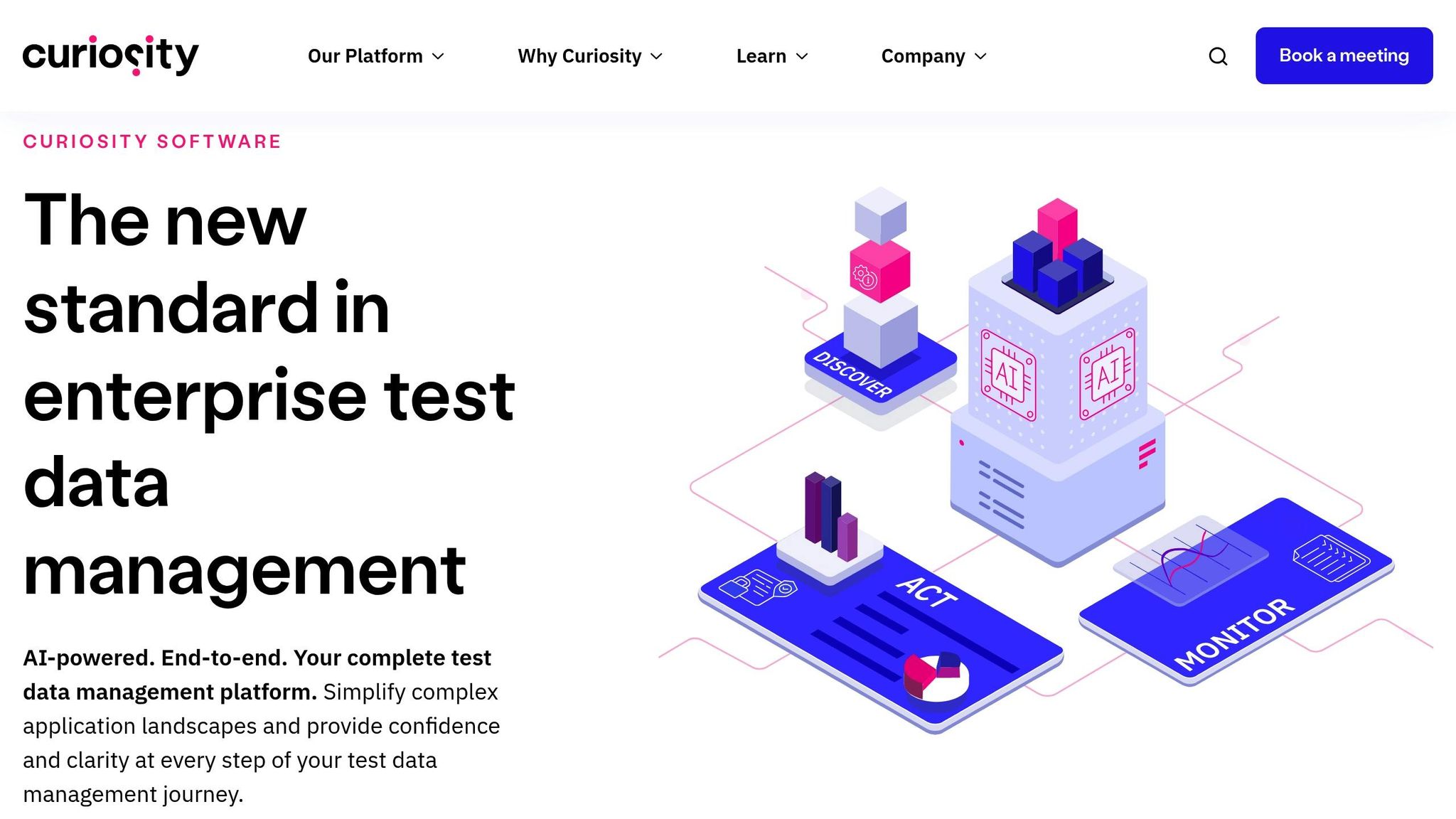
How to turbocharge your test data with AI | Curiosity Software Webinar
sbb-itb-7ae2cb2
Problems with Manual Test Data Generation
Manual test data generation, once a staple in traditional testing, struggles to meet the demands of modern QA practices. It consumes significant resources, produces unreliable datasets, and introduces compliance and project risks. Let’s break down how these manual methods inflate costs, compromise data quality, and jeopardize privacy.
High Time and Resource Costs
Manually creating test data is a time sink. About 50% of organizations take a month or longer just to refresh their datasets. On top of that, 58% of data teams still rely on manual methods for test data generation. This forces QA engineers to spend valuable time writing scripts, copying databases, and distributing files instead of focusing on actual testing tasks.
Poor Data Quality and Limited Variety
Manual datasets often suffer from "pattern lock-in" - a tendency to stick to predictable, standard scenarios while neglecting edge cases. Using a test scenario generator can help ensure these gaps are filled. For instance, rare situations like leap year dates, uncommon Unicode characters, or intricate workflows often go untested. Even worse, 54% of developers use full-size production backups for testing, which are often outdated and cumbersome. A European FinTech startup saw a 40% reduction in test cycle time after ditching production dumps in favor of synthetic data. This shift highlights how manual methods can hold teams back.
Privacy and Compliance Issues
Using real production data for testing is a privacy minefield. Moving customer databases into less-secure environments increases the risk of exposing sensitive information, such as Personally Identifiable Information (PII). Even when manually masked, datasets often leave enough clues for re-identification. A study revealed that 90% of individuals in a supposedly "anonymized" dataset of 1.1 million credit card users were re-identified by combining it with external information. Furthermore, 61% of professionals worry about data security and privacy when handling test data. Regulations like GDPR, HIPAA, and CCPA impose strict penalties for mishandling personal data, and manual processes simply can't guarantee both compliance and the level of complexity needed for robust testing.
How AI Changes Test Data Generation
AI-powered tools are reshaping how test data is created. Instead of relying on time-consuming manual processes or duplicating production databases, AI models can analyze existing data patterns and produce fresh, realistic datasets in mere seconds. This approach not only saves time but also scales effortlessly while maintaining data quality and safeguarding privacy.
Creating Synthetic Data with AI
AI models like GPT-4 and LLaMA 3 can generate synthetic datasets that mimic the structure and relationships of real data without exposing sensitive information. These datasets act as "virtual twins", maintaining the statistical and logical properties of actual data. Whether it’s structured data like transaction records, unstructured content such as user feedback, or complex API payloads, AI can create data that mirrors real-world scenarios.
Organizations can also fine-tune these AI models for specific industries. For example, in 2025, a European FinTech startup customized a generative AI model to produce synthetic transaction data for GDPR-compliant testing. The results were impressive: a 40% reduction in test cycle time, a 15% increase in defect detection for fraud detection systems, and no compliance issues during three regulatory audits.
AI doesn't stop at creating standard datasets. It excels at generating rare edge cases that are often overlooked, like unusual Unicode characters, leap year scenarios, or adversarial inputs. Tools like the open-source Synthetic Data Vault (SDV) library, which has been downloaded over 1 million times by more than 10,000 data scientists, are helping developers ensure comprehensive test coverage.
Beyond creating accurate data, AI also simplifies the entire workflow, making data generation faster and more efficient.
Automated Data Creation and Delivery
AI takes the hassle out of test data generation with dynamic, on-demand creation. Integrated into CI/CD pipelines, it generates fresh, scenario-specific datasets for each test cycle, eliminating the need to manage large, outdated datasets. Testing teams can now work with up-to-date data for every run without worrying about stale information.
The automation doesn’t end with data creation. AI tools take care of the entire process - generating records, validating them against schema rules, and delivering them directly to testing environments. These tools can even run locally on standard CPUs, avoiding the need for costly GPU hardware or internet access. This approach keeps sensitive data secure while reducing setup and operational costs.
By streamlining data workflows, AI ensures continuous testing cycles are fueled by fresh, high-quality data. It’s no surprise that 84% of organizations using AI or machine learning in database operations report increased productivity. This efficiency boost comes alongside improved privacy protections.
Better Privacy Protection and Compliance
One of the biggest challenges in test data generation is protecting privacy when using production data. AI-generated synthetic data solves this issue by creating entirely new datasets that retain statistical accuracy but contain no actual personally identifiable information (PII). This eliminates the risk of exposing sensitive customer data.
"Synthetic data is always better from a privacy perspective." - Neha Patki, Co-Founder and VP of Product, DataCebo
AI tools go a step further by applying context-aware obfuscation and differential privacy techniques to ensure sensitive information is protected. With local processing capabilities, data remains secure on-site, never passing through third-party systems. This addresses the concerns of the 61% of professionals who worry about data security and privacy risks during testing.
Looking ahead, experts anticipate that 90% of enterprise operations will rely on synthetic data in the near future. This shift highlights a new era in testing - one where organizations can confidently meet regulatory requirements, improve test coverage, and accelerate workflows, all while keeping sensitive data secure. AI is turning test data generation into a powerful tool for more efficient, privacy-conscious testing practices.
Manual vs. AI-Powered Test Data Generation

Manual vs AI-Powered Test Data Generation: Speed, Quality, and Compliance Comparison
Traditional test data generation methods often involve copying production databases or creating custom scripts. These processes can take weeks to complete and come with the added risk of exposing sensitive data. On the other hand, AI-powered solutions generate fresh, realistic datasets on demand without ever accessing sensitive production systems.
Here's a striking statistic: 50% of organizations need a month or longer to refresh test data using manual methods, whereas AI-driven tools can deliver data in just minutes. These modern solutions integrate seamlessly into CI/CD pipelines, enabling faster workflows. It's no surprise that 84% of professionals in the database sector using AI or machine learning report improved productivity.
Another significant advantage of AI-powered test data generation lies in its approach to privacy and compliance. Over half of surveyed organizations still depend on full-size production backups, which expose sensitive customer information to potential breaches. In contrast, AI-generated synthetic data eliminates this risk by creating datasets that mimic statistical patterns without containing any real personally identifiable information (PII). This directly addresses compliance concerns while ensuring data security.
"If you only test with masked production data, you are only testing against scenarios that have already succeeded. You aren't testing for the failures that haven't happened yet." - James Walker, Co-Founder, GoMask.ai
To better understand the differences, here's a side-by-side comparison of manual and AI-powered test data generation methods:
Comparison Table: Manual vs. AI-Powered Methods
| Factor | Manual/Traditional Methods | AI-Powered Solutions |
|---|---|---|
| Speed | Slow; 50% of organizations take a month or longer to refresh | Fast; generates datasets on-demand, typically within minutes |
| Data Quality | Static and stale; limited variety, excludes edge cases | Realistic and diverse; mirrors current patterns, includes rare scenarios |
| Scalability | Limited by manual effort and storage needs | High; scales automatically from thousands to millions of records |
| Compliance | High risk; uses production copies with real PII | Secure; produces fully synthetic, zero-PII data |
| Cost | High; requires extensive storage and manual labor | Lower; uses standard CPUs and reduces infrastructure requirements |
| Test Coverage | Limited; focuses on historical "Happy Path" scenarios | Comprehensive; includes edge-case ratios and adversarial inputs |
The inefficiency of traditional methods is costly - businesses lose an average of $4.3 million annually in productivity. By generating data on demand and discarding it after use, AI-powered solutions not only save time but also reduce storage needs, making them a more efficient and secure option for test data generation.
How to Implement AI-Driven Test Data Generation
Step 1: Identify Your Testing Requirements
Start by outlining exactly what your tests require. Define your data schemas - the fields, types, and constraints your application relies on. For instance, if you're testing a user registration form, specify that ages should range from 13 to 120 or that email addresses must follow proper formatting.
Don’t forget to include edge cases alongside typical scenarios. Think about duplicates, missing required fields, special characters, and boundary values. For example, if your app targets users in France, you’ll need to handle phone numbers starting with "06." If your audience includes Spanish-speaking users, account for double surnames in name fields. The more detailed your requirements, the closer your AI-generated data will mimic real-world conditions.
Also, factor in compliance needs. If your industry requires adherence to GDPR or CCPA, you’ll need synthetic, PII-free data. Tailor your approach based on the geographic and regulatory context of your application.
Once you’ve nailed down these details, you’re ready to choose an AI platform that integrates seamlessly with your workflow.
Step 2: Choose an AI-Powered Platform
Select a platform that combines AI automation with human oversight. One option is Ranger (https://ranger.net), which offers AI-driven QA testing services that integrate with tools like Slack or GitHub. This platform automates test creation and maintenance while using human validation to ensure the generated outputs are reliable.
When evaluating platforms, focus on those that fit naturally into your existing setup. The ideal solution should connect easily to your CI/CD pipeline and support the data formats you already use, such as JSON or Excel.
Step 3: Set Up and Generate Data
Configure your AI tool with natural language prompts that provide specific context. For example, instead of requesting generic "addresses", ask for "addresses in Lisbon for a rental agency". Precision in your prompts leads to better results.
Decide how to generate data based on your needs. You might create raw data, standalone executable code, or code that integrates with libraries like Faker.js. A study of 42 attempts to generate test data code using LLMs showed that executable code was successfully produced in 29 cases - about 69%.
Be sure to include both valid and invalid cases, such as missing fields or incorrect data types, to thoroughly test your system’s error handling capabilities.
Step 4: Verify and Connect Data to Your Pipeline
Carefully review the generated data for accuracy before integrating it. This step is especially important for less common languages or scenarios that demand real-world precision.
"AI systems fail because of bad data, not bad UI" - Latha Narayanappa, AI Test Data Engineering Specialist
Store your verified data in formats like JSON or Excel, and link it to your CI/CD pipeline. You can either commit the generated files to your repository for consistency or use scripts to generate fresh data during each pipeline run. Since LLMs are non-deterministic, meaning they might produce different outputs for the same prompt, consider snapshotting or caching your data to avoid test inconsistencies.
Once your data is verified and integrated, the next step is to monitor and refine your process.
Step 5: Track Performance and Make Improvements
Keep an eye on how well your AI-generated data performs in testing. Measure factors like schema compliance, edge case coverage, and the number of bugs detected. If the results aren’t meeting expectations, tweak your prompts to improve the generation logic.
As your application evolves, update your data generation requirements. New features often bring new data needs, so revisiting and refining your prompts ensures your test data stays relevant and effective over time.
How Ranger Simplifies Test Data Generation
Ranger showcases how AI-powered tools can make test data generation easier and more efficient by blending automation with human input.
Ranger (https://ranger.net) simplifies the process by using machine learning to create synthetic data that mimics real-world production scenarios. The result? Test data that behaves like the real thing but avoids exposing sensitive information.
The platform offers a flexible hybrid model. You can generate data using rules-based methods, AI-driven synthetic generation, or a mix of both - tailored to your needs. If production data isn’t available, Ranger’s AI steps in to create entirely synthetic datasets.
Seamless integration with your existing workflow is another key feature. Ranger connects directly with tools like Slack and GitHub, allowing test data to flow smoothly into your CI/CD pipeline. This eliminates the hassle of juggling multiple platforms and ensures your team can manage test data without disrupting their regular workflow.
A standout feature is Ranger’s natural language assistant, which makes generating data rules as simple as typing a request in plain English. For example, you might say, “I need a list of U.S. airports,” and the platform will automatically generate the appropriate data rules. This removes the need for manual seed lists and lowers the technical barrier for non-specialists.
Ranger also automates data profiling. By analyzing your existing test data, it identifies data types and determines the rules needed for synthetic generation. This ensures your datasets are thorough and relevant, without requiring manual setup. Combined with human oversight and continuous testing, Ranger helps teams catch bugs faster while maintaining privacy-first compliance.
This approach represents a major step forward, shifting test data generation from manual processes to smarter, AI-driven solutions.
Conclusion
AI-driven test data generation is revolutionizing QA workflows by slashing preparation time by up to 70% and cutting test cycle durations by 40%. Instead of spending hours - or even days - manually creating test records, teams can now generate thousands of unique and valid datasets in just seconds. This efficiency allows QA teams to shift their focus toward exploratory testing and tackling complex test designs, rather than being bogged down by repetitive data preparation.
But it’s not just about speed. AI also enhances the quality of testing by introducing edge cases and rare scenarios, boosting defect detection rates by 15%. At the same time, it ensures compliance with regulations like GDPR and CCPA by generating realistic datasets that exclude any personally identifiable information.
A great example of this shift is Ranger (https://ranger.net). This platform combines AI automation with human oversight to simplify test data generation. It automates test creation and solves common test maintenance issues, integrates seamlessly with tools like Slack and GitHub, and delivers consistent results - all without requiring users to have deep technical expertise. This highlights how AI-powered solutions can outperform traditional manual methods in modern QA environments.
If your team is looking to deliver features faster without sacrificing quality, adopting Ranger’s AI-driven approach can help you uncover critical bugs earlier, reduce manual workload, and keep up with the demands of today’s rapid development cycles.
FAQs
How do I validate AI-generated test data is realistic but PII-free?
To create AI-generated test data that's both realistic and free of personal information, synthetic data techniques are key. These methods mimic real-world patterns while deliberately excluding any personal details. For added privacy protection, tools like differential privacy are effective, as they prevent the re-identification of individuals in the dataset.
Once the synthetic data is generated, it's essential to validate it. This means comparing its statistical properties to those of real-world data. By ensuring the synthetic data reflects actual distributions, you can achieve realistic results without compromising sensitive information. This approach strikes a balance between authenticity and strong privacy protections.
How can AI test data generation fit into my CI/CD pipeline without flaky tests?
AI test data generation fits naturally into CI/CD pipelines by automating the process of creating synthetic datasets that mimic real-world conditions while maintaining privacy. This approach minimizes flaky tests and ensures more consistent and dependable results. These AI-powered tools also anonymize sensitive information to comply with regulations like GDPR and HIPAA. They can speed up test setup by as much as 70% and enhance test coverage, leading to quicker feedback and more efficient workflows.
What’s the best way to define schemas and edge cases for synthetic test data?
The best way to outline schemas and handle edge cases for synthetic test data is by leveraging AI-powered techniques such as generative adversarial networks (GANs), large language models (LLMs), and hybrid rule-based systems. These methods produce datasets that closely resemble real-world data, effectively capturing intricate edge cases while maintaining compliance. AI models excel at identifying patterns and relationships, enabling them to create context-aware, privacy-compliant data that aligns with specific needs.
Related Blog Posts
Stop babysitting your coding agents. Use Ranger
%201%20(1).svg)
More signals, less noise, faster launches
Let Ranger be your guide to sustainable QA testing.

.png)