%201.svg)
Top Tools for AI Test Data Versioning


AI test data versioning tools help manage, track, and control datasets used in machine learning workflows. These tools ensure reproducibility and streamline processes by enabling teams to version datasets like code. Here are five standout tools for this purpose:
- Ranger: Focuses on integrating AI-driven testing with human oversight. Ideal for teams needing automated AI test data management directly within CI/CD workflows.
- Oxen AI: Handles massive datasets with a Git-like approach, offering fast sync and indexing. Best for large-scale ML projects with millions of files.
- LakeFS: Brings Git-style versioning to data lakes, cutting testing times significantly. Suitable for enterprise-level data lakes and distributed teams.
- DVC: A Git-compatible system for smaller to mid-sized projects, tracking data and experiments efficiently.
- Delta Lake: Built for structured data, it supports ACID transactions and versioning, making it a strong choice for Spark-based environments.
Quick Comparison
| Tool | Strengths | Weaknesses | Best Use Case |
|---|---|---|---|
| Ranger | AI-driven testing with Slack/GitHub integration | Not a full data versioning tool | Teams needing integrated QA testing |
| Oxen AI | Handles massive datasets quickly | Limited third-party integrations | Large-scale ML projects |
| LakeFS | Scales for data lakes, zero-copy branching | Complex UI, needs DevOps expertise | Enterprise-level data lakes |
| DVC | Git-compatible, experiment tracking | Struggles with many large files | Small to mid-sized ML workflows |
| Delta Lake | ACID transactions, schema enforcement | Overkill for non-Spark setups | Spark-based data warehousing |
Each tool serves specific needs based on scale, infrastructure, and workflows. Choose the one that aligns with your team's goals and technical requirements.

AI Test Data Versioning Tools Comparison: Features, Strengths and Best Use Cases
1. Ranger
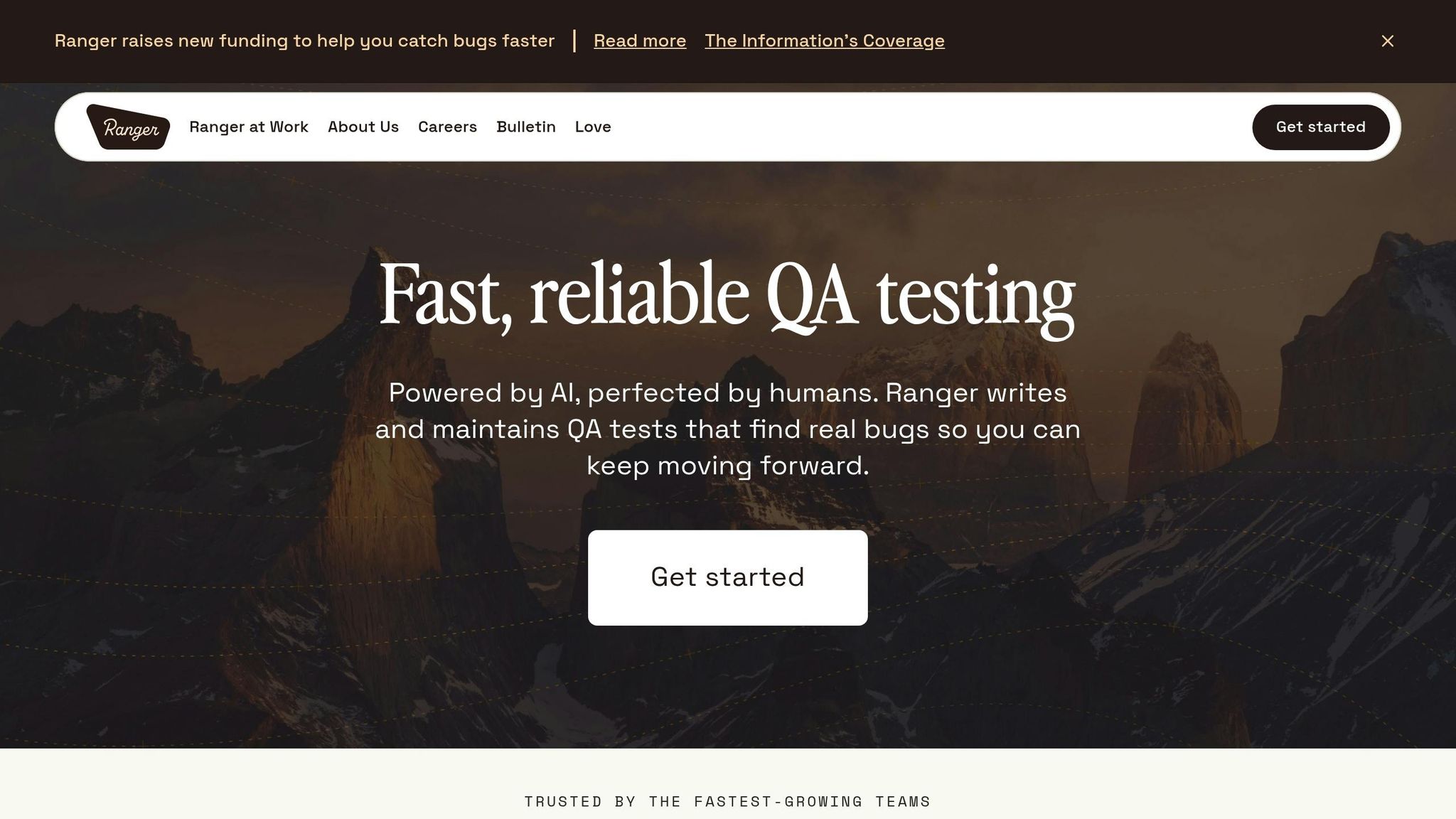
Ranger brings Git-based versioning to the forefront by creating clear, human-readable Playwright test scripts directly within your GitHub repository. This ensures that your test logic evolves seamlessly alongside your application code, creating a unified source of truth for both development and QA workflows. With this setup, testing harnesses stay perfectly aligned with every code update.
AI Capabilities
Ranger leverages an AI-powered web agent to navigate websites and automatically generate Playwright test scripts based on your testing plans. Their approach blends AI-generated initial code with human QA review in what they call a "cyborg model." This hybrid strategy ensures precision and efficiency, with customers reporting over 200 hours saved per engineer annually by automating repetitive testing tasks.
The platform also excels in handling automated triage for test failures. Its AI determines whether issues arise from actual bugs or script errors, saving teams time and effort. Notably, Ranger collaborated with OpenAI during the development of the o3-mini model, building a specialized web browsing harness to test the model's ability to perform tasks via a browser. As highlighted in OpenAI's o3-mini research paper:
"To accurately capture our models' agentic capabilities across a variety of surfaces, we also collaborated with Ranger, a QA testing company that built a web browsing harness that enables models to perform tasks through the browser."
Integrations
Ranger integrates seamlessly with GitHub and Slack to streamline team workflows. Slack integration, for instance, delivers real-time notifications and allows teams to tag specific stakeholders when tests fail. Additionally, the platform runs tests in staging and preview environments, catching bugs before they make it to production. These integrations, paired with Ranger's automation features, simplify development and QA processes considerably.
Usability and Automation
By combining powerful integrations with advanced automation, Ranger offers a comprehensive solution that boosts testing reliability. The platform manages the entire testing infrastructure, from launching browsers to maintaining environments and updating test flows as new features are rolled out. Martin Camacho, Co-Founder at Suno, praised Ranger’s ability to keep up with fast-paced development cycles:
"They make it easy to keep quality high while maintaining high engineering velocity. We are always adding new features, and Ranger has them covered rapidly."
Ranger operates on annual contracts, with pricing based on the size of your test suite. It’s particularly well-suited for agile, web-based product teams that need dependable end-to-end testing without the burden of manual upkeep.
2. Oxen AI
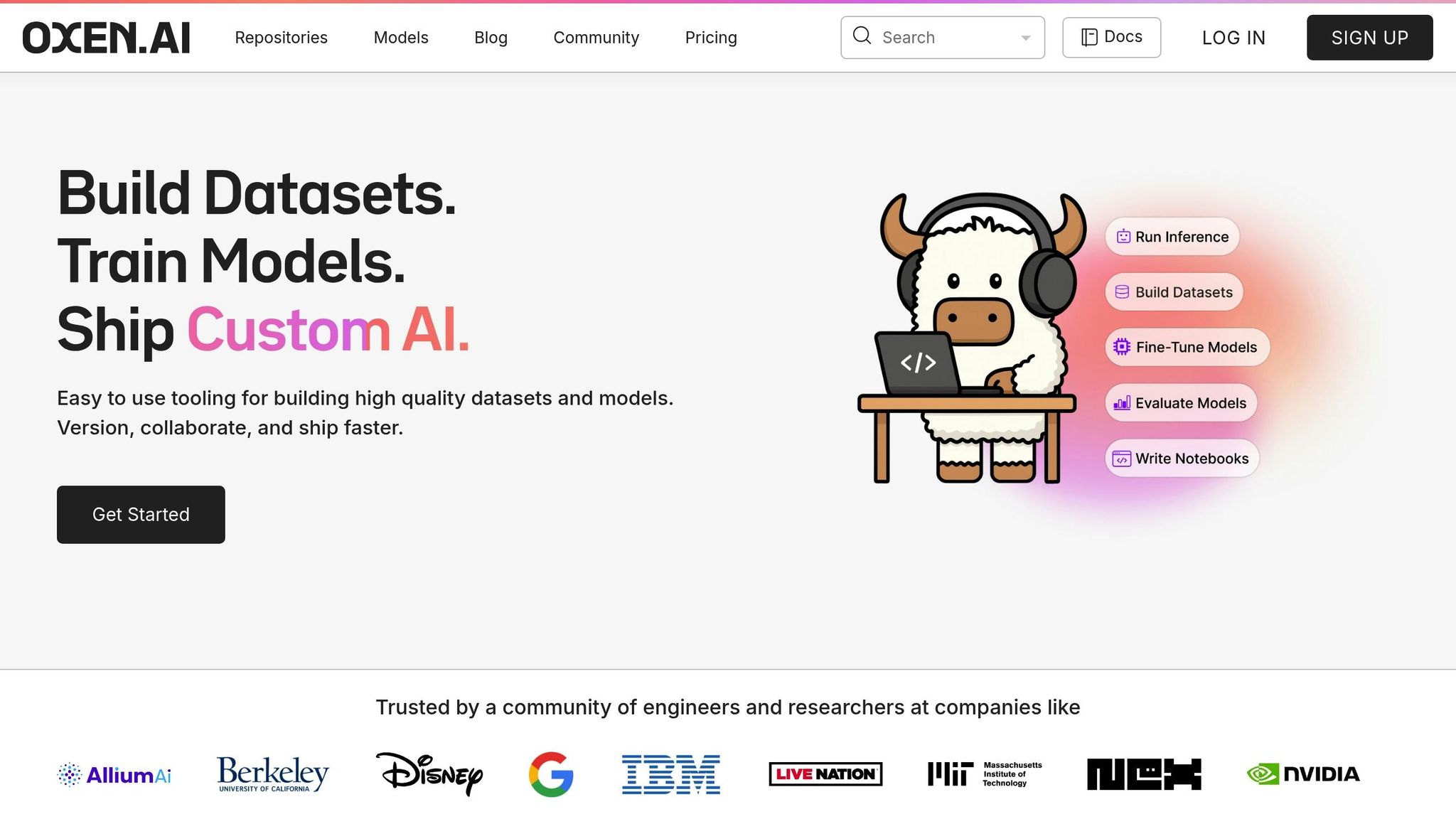
Oxen AI stands out with a workflow tailored for handling massive test datasets. It combines a Git-style approach with tools specifically designed for large-scale data management. Its hybrid versioning model supports both local and remote workflows, making it possible to work directly with remote repositories without needing to download or clone enormous datasets.
Versioning Model
At the core of Oxen's system is a Merkle tree architecture paired with data deduplication. This setup excels at managing millions of files, outperforming standard Git-LFS. For tabular data, Oxen optimizes formats like CSV, Parquet, and JSONL by indexing them into a lightweight DuckDB database on the remote server. This allows for row-level versioning, making it easy to pinpoint exactly which rows have been modified. The oxen diff command, combined with the --keys flag, provides granular insights, letting users track changes at the row, column, and even individual cell levels.
Oxen also introduces workspaces for remote collaboration. These workspaces allow teams to stage and batch commit changes, making it particularly useful for tasks like cleaning and updating test data collaboratively.
AI Capabilities
Oxen integrates AI into its versioning process, offering tools that convert natural language queries into SQL. The platform also supports integrated model inference, enabling direct application of models like GPT-4 or Llama on versioned test data. This functionality can be used to create synthetic test cases, label data rows, or enhance existing datasets. For teams working with embeddings, Oxen doubles as a vector database, providing similarity search features that allow sorting and tracking of test data based on semantic similarity.
Integrations
Oxen ensures compatibility with Python libraries like Pandas by implementing the fsspec interface, enabling direct dataframe operations through oxen:// URLs. It offers native bindings for Python and Rust, along with a full REST API, making it accessible for developers working in various programming languages. Its Git-like command-line interface simplifies integration into existing shell-based workflows, minimizing the learning curve. Additionally, DuckDB integration allows high-performance SQL queries to be run directly on versioned files.
Usability and Automation
Oxen has demonstrated impressive performance benchmarks. For example, on the ImageNet dataset, Oxen outperformed traditional tools, with Git-LFS taking 20 hours for a push operation compared to DVC's 3–5 hours on S3 buckets. Designed to handle monorepos with millions of files and terabytes of data, Oxen scales effortlessly to meet demanding requirements. Greg Schoeninger, the founder of Oxen.ai, shares the vision behind the platform:
"Oxen was built to track and store changes for everything from a single CSV to data repositories with millions of unstructured images, videos, audio or text files."
Oxen caters to a range of users by offering both open-source tools for self-hosting and a hosted solution called OxenHub, which includes a free account tier. Its Remote Workflow feature is particularly advantageous, allowing users to add or commit files directly to the server without downloading entire datasets. This capability is a game-changer for managing multi-terabyte test data collections. With its robust performance and scalability, Oxen AI has become a valuable tool for modern test data versioning workflows.
3. LakeFS
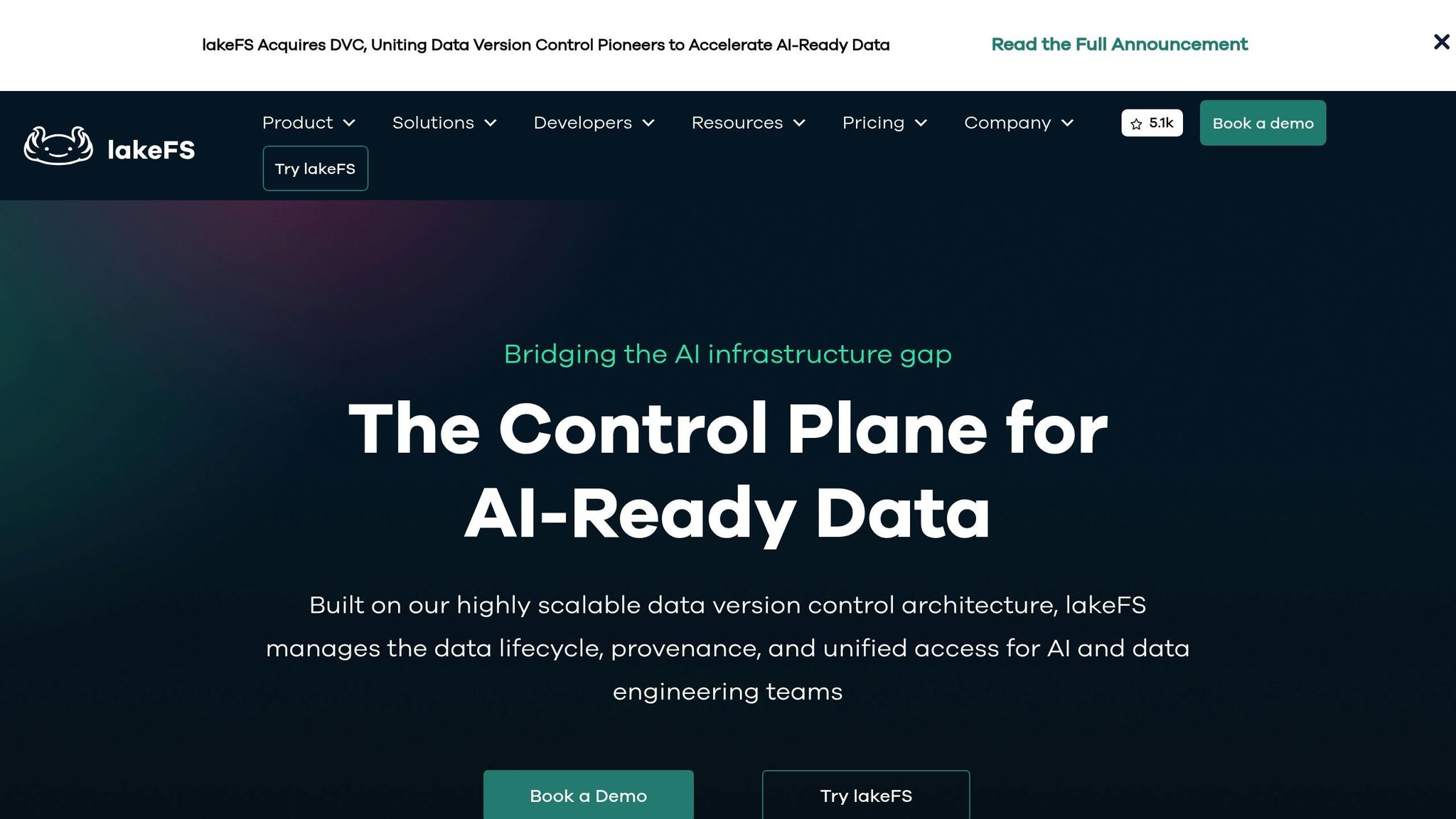
LakeFS introduces Git-style version control to data lakes, allowing users to perform familiar operations like branch, commit, merge, and revert directly on test datasets. Acting as a metadata layer over object storage systems like AWS S3, Azure Blob, and Google Cloud Storage, LakeFS manages pointers instead of duplicating data. This design enables zero-copy branching, allowing for instant, isolated testing without the need for data replication. With its comprehensive features, LakeFS supports efficient and secure management of test data.
Versioning Model
LakeFS employs atomic merges to ensure changes are applied consistently. Each commit creates an immutable snapshot, providing a complete audit trail and making it easy to revert changes when needed. One notable example highlights how adopting LakeFS significantly reduced testing times. At Netflix, Open Source Engineer Holden Karau set up testing against production-scale data in less than 20 minutes.
"lakeFS saved us from the hesitation over complex testing procedures on our data lake at Netflix scale."
– Holden Karau, Open Source Engineer, Netflix
This robust versioning system integrates seamlessly with popular data and machine learning tools, streamlining workflows across teams.
Integrations
LakeFS supports S3-compatible APIs, making it easy to connect with tools like Boto3, Pandas, Spark, PyTorch, TensorFlow, MLflow, and AWS SageMaker by simply updating the endpoint URL. It also works with orchestration tools such as Airflow, Dagster, and Kubeflow, enabling teams to automate data versioning within their existing pipelines. For deep learning workflows, the lakectl local command helps localize data, minimizing latency and ensuring that expensive GPU resources are used efficiently.
Governance and Compliance
LakeFS enhances data integrity with strict governance features. It uses a Write-Audit-Publish (WAP) pattern: data is written to an isolated branch, audited for quality and compliance, and merged into production only after passing all checks. Automated governance is further supported by hooks that run validation checks - like identifying PII or verifying data formats - during pre-merge and pre-commit stages. For instance, Arm implemented LakeFS to establish a strong governance framework across distributed teams, leading to quicker product launches and improved development speed.
"Transparent, traceable and repeatable development of AI is critical to us. What's important for Lockheed Martin is that we don't just focus on what we're building but also on the how."
– Greg Forrest, Director of AI Foundations, Lockheed Martin
Usability and Automation
LakeFS is designed to handle billions of objects and petabytes of data while maintaining high performance. It supports a variety of data formats, including structured files (Parquet, CSV), open table formats (Delta Lake, Iceberg), and unstructured data like images, videos, and sensor outputs. Available as both an open-source project for self-hosting and as LakeFS Cloud with a 30-day free trial, it has also been recognized in the 2025 Gartner Market Guide for DataOps Tools as a Representative Vendor.
sbb-itb-7ae2cb2
4. DVC
When it comes to managing test data versions in AI projects, DVC (Data Version Control) streamlines the process by integrating seamlessly with Git workflows. Instead of cramming large files into Git repositories, DVC uses lightweight metafiles (like .dvc and dvc.yaml) as placeholders. These metafiles are tracked in Git, while the actual data is stored separately - either in a local cache or on cloud platforms like AWS S3, Google Cloud Storage, or Azure Blob Storage. This setup ensures efficient data handling and sets the groundwork for a scalable versioning system.
Versioning Model
DVC employs MD5 hashes to track files, ensuring data integrity. It links files using methods like reflinks, hardlinks, or symlinks, which eliminates redundant computations and keeps projects efficient - even when working with datasets at the petabyte scale. Since DVC stores large files externally, GitHub's typical 2 GB repository limit becomes irrelevant, making it an ideal tool for managing massive datasets.
AI Capabilities
DVC simplifies the creation of data pipelines with DAGs (Directed Acyclic Graphs) defined in dvc.yaml. You can run experiments using dvc exp run and even queue multiple experiment variations with dvc queue. While you're at it, DVCLive takes care of logging metrics, parameters, and artifacts for popular frameworks like PyTorch, TensorFlow, Keras, and Hugging Face.
Integrations
DVC works across Linux, macOS, and Windows without needing specialized servers or databases, making it highly adaptable. It also offers a VS Code extension, enabling teams to manage experiments and data versions directly from their IDE. For CI/CD workflows, DVC integrates with GitHub Actions and CML (Continuous Machine Learning), automating machine learning pipelines through standard Pull Requests. Additionally, teams can create a "data registry" by using commands like dvc get or dvc import, allowing them to reuse specific data versions across multiple projects.
Governance and Compliance
DVC's governance framework ensures auditability and control by leveraging Git as its backbone. Teams can enforce data compliance through Git Pull Request reviews, maintaining a clear and immutable project history. This makes it easy to track when datasets or models were modified, reviewed, and approved. By separating code in Git from remotely stored data, DVC creates a comprehensive audit trail while keeping repositories manageable. This method allows data science teams to apply software development governance practices to their datasets and models, ensuring transparency and accountability.
5. Delta Lake
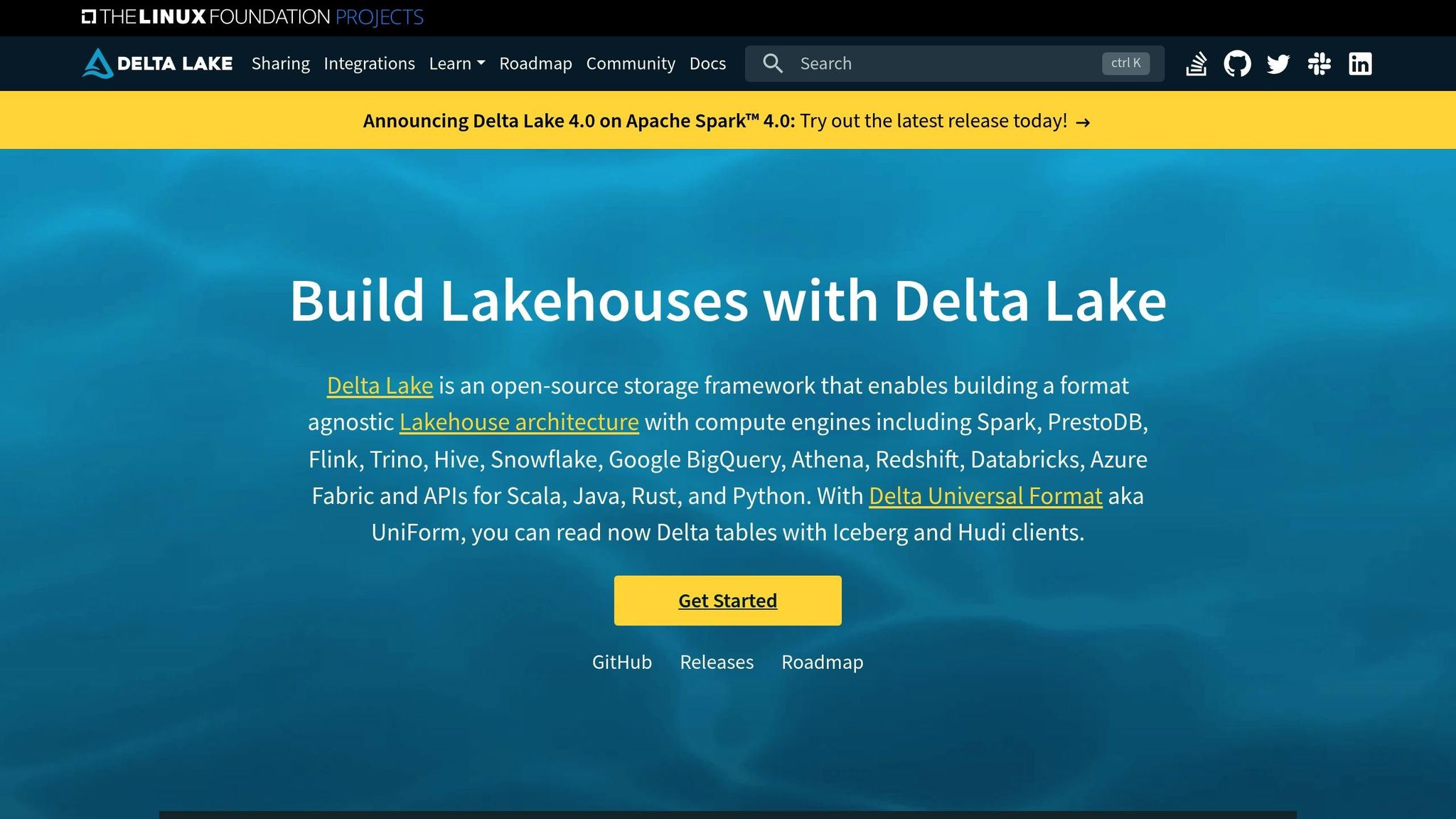
Delta Lake stands out in the realm of AI test data versioning tools by building directly on modern data lakes. It enhances existing data lake infrastructures by introducing a transaction log that meticulously records every change made to tables. This transaction log, stored in the _delta_log directory, ensures compatibility with platforms like Amazon S3, Azure Data Lake Storage, and Google Cloud Storage.
Versioning Model
Delta Lake's versioning approach relies on JSON-based atomic commits, creating a complete historical record of changes. With its Time Travel feature, users can query specific versions of data by referencing a version number (e.g., versionAsOf: 75) or a timestamp. This is incredibly helpful for recreating machine learning experiments with the exact dataset used during training, following version control best practices for AI. Delta Lake ensures data consistency with ACID transactions and serializable isolation, preventing readers from accessing incomplete data during concurrent writes [37,40]. Additionally, it enforces schema consistency by rejecting records that don't align with the defined schema. For more detailed tracking, the Change Data Feed can be activated (delta.enableChangeDataFeed = true) to log row-level changes, a critical feature for high-compliance AI projects.
Integrations
Delta Lake boasts seamless integration with major data processing engines, including Apache Spark, Apache Flink, Apache Hive, Apache Trino, and AWS Athena. It supports Iceberg Compatibility (V1 and V2), which allows tools using the Iceberg protocol to directly read Delta tables. Through its Python bindings (delta-rs), data in Delta Lake becomes accessible to machine learning frameworks like TensorFlow, PyTorch, Pandas, and HuggingFace Datasets. It also integrates smoothly with platforms such as AWS SageMaker and Databricks [1,25]. These integrations make Delta Lake a powerful tool in AI testing workflows, bridging the gap between data storage and machine learning applications.
Governance and Compliance
When paired with Unity Catalog in the Databricks ecosystem, Delta Lake provides centralized governance with precise access controls, even down to individual rows and columns. Its transaction log doubles as a comprehensive audit trail, documenting operations like WRITE, UPDATE, and DELETE, along with relevant metrics [41,42]. These capabilities make Delta Lake a reliable option for managing reproducible and compliant AI test data, ensuring both transparency and control.
Strengths and Weaknesses
When it comes to AI test data versioning, each tool offers unique benefits and challenges. The right choice depends on factors like your team's size, infrastructure, and the types of data you work with.
Ranger stands out for blending AI-driven testing with human oversight. It’s perfect for teams looking for a smooth testing process without the hassle of managing DevOps. Its hosted infrastructure and compatibility with popular CI/CD tools make it a convenient option.
Oxen.ai is all about speed, capable of quickly handling datasets like ImageNet. Its Git-like command-line interface is developer-friendly, but being a relatively new tool, it lacks extensive third-party integrations.
LakeFS is designed for managing large-scale data lakes, offering Git-like branching and cutting testing time by up to 80%. However, its interface can be challenging to navigate, and it requires DevOps expertise to handle its centralized control plane.
Here’s a quick comparison of the tools, highlighting their strengths, weaknesses, and ideal use cases:
| Tool | Primary Strength | Primary Weakness | Best-Fit Scenario |
|---|---|---|---|
| Ranger | AI-driven testing with human oversight; no DevOps management | Not a standalone data versioning tool | Teams needing integrated testing with CI/CD |
| Oxen.ai | Lightning-fast sync and indexing for large datasets | Limited ecosystem and integrations | Large-scale ML projects with millions of files |
| LakeFS | Scalable branching for object storage; zero-copy operations | Complex UI; requires DevOps expertise | Enterprise-level data lakes at petabyte scale |
| DVC | Git-native design; excellent for experiment tracking | Struggles with large file counts | Small to mid-sized ML experiments within Git workflows |
| Delta Lake | ACID transactions with schema enforcement | Overkill for non-Spark setups | Databricks/Spark-based data warehousing |
DVC is a solid choice for smaller to mid-sized projects. Its lightweight, serverless design and strong Git integration (boasting over 15,000 GitHub stars) make it popular. However, it falters when dealing with extensive or numerous files, making it less suitable for enterprise-scale operations.
Delta Lake, on the other hand, is tailored for Spark-based environments. It shines with features like ACID transactions and time travel, making it ideal for tabular data. However, it’s less effective for unstructured datasets like images or videos.
Conclusion
When choosing a tool, it's crucial to align it with your team's size, workflow, and specific needs. DVC is an excellent choice for individual data scientists or smaller teams working within Git workflows. Its lightweight, server-free, and open-source nature makes it ideal for small-scale machine learning experiments, keeping overhead to a minimum.
For larger operations managing massive data lakes, lakeFS offers a scalable and integrated solution. Its zero-copy branching feature stands out, allowing teams to test on production data without duplication. In fact, two projects reported cutting testing time by 80% after adopting lakeFS. Additionally, lakeFS integrates effortlessly with tools like Great Expectations for data quality, Airflow for orchestration, and ML frameworks such as AWS SageMaker and Databricks.
If your work revolves around Spark and structured data warehousing, Delta Lake is the clear choice. Its support for ACID transactions and schema enforcement makes it indispensable for Spark-centric environments, particularly when paired with infrastructure like Databricks or Spark.
For teams prioritizing integrated testing, Ranger offers a blend of AI-driven quality assurance and human oversight. With seamless integration into platforms like Slack, GitHub, and CI/CD pipelines, it’s perfect for teams that want testing embedded directly into their development workflow, eliminating the need for separate versioning infrastructure.
FAQs
How do AI test data versioning tools improve reproducibility in machine learning projects?
AI test data versioning tools work by capturing every change to a dataset as an unchangeable snapshot, much like how version control systems manage source code. This setup allows teams to easily reference, compare, or revert to earlier data versions, ensuring consistency and enabling experiments to be repeated under identical conditions.
Features such as version tagging, lineage tracking, and rollback options simplify dataset management and provide clarity on how data has been processed or altered. These tools also pair datasets with related elements, like training scripts and model configurations, creating a single, dependable source for machine learning workflows. By keeping data, code, and models in sync, teams can avoid mismatches and consistently produce reliable, reproducible outcomes.
What should my team look for in an AI test data versioning tool?
Choosing an AI test data versioning tool requires aligning its features with your team’s workflows and priorities. Start by seeking tools that provide scalable storage and efficient data management - this is crucial for handling large datasets without driving up costs. Features like deduplication and support for object storage solutions (like S3) are particularly helpful when working with high-dimensional data.
Make sure the tool includes metadata and lineage tracking capabilities. These features are key for maintaining reproducibility and transparency, letting you track how datasets evolve and pinpoint which versions were used in specific experiments. Additionally, tools that integrate seamlessly with your existing ecosystem - whether it’s Python, TensorFlow, GitHub, or even communication platforms like Slack - can save time and reduce manual tasks.
For teams spread across locations, collaboration and governance features are a must. Look for role-based access controls and audit logs to help the team stay aligned and ensure compliance. Lastly, don’t overlook usability - a user-friendly interface, detailed documentation, and responsive support can make the tool easier to adopt and keep your team running smoothly. Focusing on these aspects will ensure the tool grows with your data and meets your AI testing requirements.
How does Ranger use AI to enhance test data versioning?
Ranger uses AI-driven automation to simplify and enhance test data versioning. By examining past test results, tracking code changes, and assessing potential risks, it ensures that test datasets stay up-to-date and aligned with the evolution of your product.
What’s more, this system enables self-healing datasets, which minimizes the need for manual intervention while boosting reliability. With Ranger, software teams can save valuable time, identify real bugs more effectively, and maintain rigorous testing standards throughout the development process.
Related Blog Posts
Stop babysitting your coding agents. Use Ranger
%201%20(1).svg)
More signals, less noise, faster launches
Let Ranger be your guide to sustainable QA testing.

.png)