%201.svg)
How QA Automation Improves Engineering Velocity


QA automation accelerates software delivery by minimizing manual vs automated testing trade-offs, reducing errors, and providing instant feedback. It enables development teams to deploy features faster while maintaining quality. Here's how it works:
- Speeds up regression testing: Automation cuts regression testing from days to minutes, allowing teams to focus on more critical tasks.
- Boosts reliability: Automated tests deliver consistent results, reducing human error and catching issues early in the development cycle.
- Integrates with CI/CD pipelines: Automated tests run with every code commit, ensuring faster detection and resolution of bugs.
- Leverages AI for efficiency: AI-powered tools optimize test coverage, reduce flaky tests, and streamline maintenance tasks.
The Future of Test Automation: AI, Coverage & Speed with QA Wolf's Jon Perl
sbb-itb-7ae2cb2
Automating Regression Testing to Reduce Manual Work
Regression testing is one of the most labor-intensive parts of the QA process. Every time a new feature is added or a bug is fixed, existing functionalities need to be re-verified. If done manually, this process can stretch over days - or even weeks - depending on the size of the application. Automation drastically changes this dynamic, cutting test execution down to hours or even minutes.
By automating regression testing, QA teams can skip the repetitive manual tasks that come with manually verifying user flows. Instead of clicking through the same processes over and over, automated test suites handle these checks consistently with every deployment. This shift allows QA engineers to focus on higher-value tasks like exploratory testing, performance analysis, and improving overall quality strategies. It’s a move that not only saves time but also enhances the entire testing process.
How Automated Test Suites Reduce Manual Overhead
Automated test suites bring consistency and reliability to regression testing. They follow the same steps every time, eliminating the variability that comes with manual testing. For example, one Delivery Manager reported reducing an eight-engineer, full-day manual testing process to just one hour through automation - making daily releases possible.
Modern AI-powered tools take this a step further. These tools can scan applications, identify user flows, and generate test scripts in mere minutes - a task that used to take weeks. They also include self-healing capabilities, which automatically update selectors when UI changes occur. This feature alone eliminates the need for manual maintenance, which traditionally consumed about 40% of a QA team’s time. Some platforms even boast a 93% pass rate on AI-generated tests after just one iteration.
AI also optimizes testing by analyzing code changes and running only the relevant tests. This predictive analytics approach focuses on areas impacted by recent updates, reducing manual effort by as much as 90%. The combination of speed, accuracy, and reduced effort makes automation a game-changer for regression testing.
Maintaining Speed and Accuracy Across Test Cycles
Manual testing often struggles with consistency due to human variability. Automated tests, on the other hand, execute the same steps every time, ensuring repeatable and reliable results.
This reliability becomes even more critical as applications expand. Automated test suites can run tests simultaneously across multiple browsers, devices, and operating systems - something that’s nearly impossible to achieve manually. Parallel execution compresses feedback loops, turning hours of testing into just minutes.
Another advantage of automation is its resistance to human error. Automated tests don’t get tired or distracted, meaning they catch issues consistently. When integrated into a CI/CD pipeline, these tests provide immediate feedback on every code commit. Developers can then address defects right away, preventing small issues from snowballing into larger problems. This approach, often referred to as "shift-left testing", catches bugs earlier in the development cycle, making them easier and cheaper to fix. The result? Faster development cycles and a smoother CI/CD workflow overall.
Improving Test Reliability with AI and Human Oversight
For QA automation to be effective, reliable tests are a must. When tests behave inconsistently - passing one moment and failing the next without any changes to the code - it shakes confidence in the automation process. This inconsistency, known as flaky testing, can disrupt CI/CD pipelines and eat up valuable engineering hours. AI steps in to address this by spotting patterns across test runs, flagging unstable tests, and adapting to minor changes that might otherwise break traditional test scripts.
The impact of AI on test reliability is clear. By incorporating AI-based features like locator resilience and failure clustering, teams have managed to cut flake rates from 15% to under 5%. At a larger scale, companies like Google have even developed internal systems to identify and isolate flaky tests, as these issues consume considerable engineering resources. As AgileVerify points out:
When engineers stop trusting automation results, they start ignoring red builds. And once that happens, the entire purpose of test automation begins to erode.
These AI-driven improvements are crucial for tackling flaky tests and restoring trust in automation.
Using AI to Eliminate Flaky Tests
AI combats flaky tests through a variety of detection and adaptation techniques. For instance, AI-powered systems use self-healing mechanisms that analyze multiple attributes - such as text, DOM hierarchy, and visual elements - to automatically adjust tests when minor UI changes occur.
AI also identifies flaky tests by analyzing execution patterns across repeated runs. It examines factors like test step timing, flagging potential issues when a step’s duration suddenly spikes, say from 400 milliseconds to 3 seconds. Advanced systems even assign a flakiness score to individual test cases based on their history, helping teams prioritize which tests need stabilization. Visual AI testing platforms go a step further by analyzing page layouts instead of just relying on the DOM structure. This reduces false positives caused by minor structural updates that don’t affect the actual user experience.
Combining AI with Human Review for Better Results
While AI automates many aspects of test maintenance, human expertise is still essential for handling complex scenarios. As AgileVerify explains:
AI in test maintenance is not about replacing testers. It's about reducing the fragility that traditional scripts introduce.
Human oversight plays a critical role in designing test architectures and ensuring the overall stability of the testing framework.
The real power lies in human-AI collaboration. AI excels at repetitive tasks - like adjusting selectors, spotting patterns, and grouping failures - while humans focus on strategic decisions and nuanced issues that AI might miss. For example, AI leverages Natural Language Processing (NLP) to analyze logs and stack traces, clustering similar failures and distinguishing between environmental issues (like network latency) and actual regressions. However, when it comes to interpreting business logic or evaluating subtle aspects of the user experience, human judgment remains indispensable.
This collaborative approach also helps combat "automation fatigue." Neova Solutions highlights the danger:
The biggest risk with flaky tests is not false failures, it's automation fatigue. When teams start to assume that failures are flaky, they may ignore genuine defects.
Platforms like Ranger tackle this by blending AI-driven test creation and maintenance with human-reviewed test code. This ensures automation results stay reliable, real bugs are promptly addressed, and teams receive actionable feedback that keeps development cycles running smoothly.
Integrating QA Automation into CI/CD Pipelines
When QA automation becomes part of your CI/CD pipeline, testing transforms from a potential bottleneck into a powerful accelerator. By running automated tests with every code commit, issues can be identified in minutes instead of hours. This rapid feedback loop ensures developers know immediately if their changes disrupt existing functionality, allowing them to fix problems while the details are still fresh in their minds. This seamless connection between testing and deployment workflows not only speeds up issue detection but also streamlines the entire development process.
Modern CI/CD platforms like GitHub Actions make this integration straightforward. They allow automated tests to trigger during pull requests, merges, or even at scheduled intervals. Tools like Ranger simplify the process further by directly connecting with GitHub and offering hosted test infrastructure, making it easier to embed automation into your workflow.
Faster Feedback Loops with Parallel Testing
Long feedback cycles can drag down engineering productivity. Parallel testing offers a solution by distributing test workloads across multiple runners, dramatically cutting down pipeline durations. Sequential test runs can stretch CI pipelines to 40 minutes or longer, but parallel testing splits the test suite into smaller chunks that run simultaneously.
As Nawaz Dhandala, Author and Engineer at OneUptime, puts it:
Parallel testing is the most impactful optimization for slow CI pipelines. The goal is fast, consistent feedback on every commit.
For example, distributing tests across four runners can slash a 40-minute test suite down to just 10 minutes - a 75% reduction. This is achieved through test sharding, where frameworks like Playwright, Jest, and Vitest divide tests into manageable portions that run concurrently. Python users can leverage tools like pytest-xdist for automatic test distribution.
To maximize efficiency, balancing shards based on historical execution times ensures that all parallel jobs finish at the same time, eliminating delays. Teams can start small - using just a few shards - and refine their approach based on actual performance data.
Real-Time Notifications Through Slack and GitHub Integration
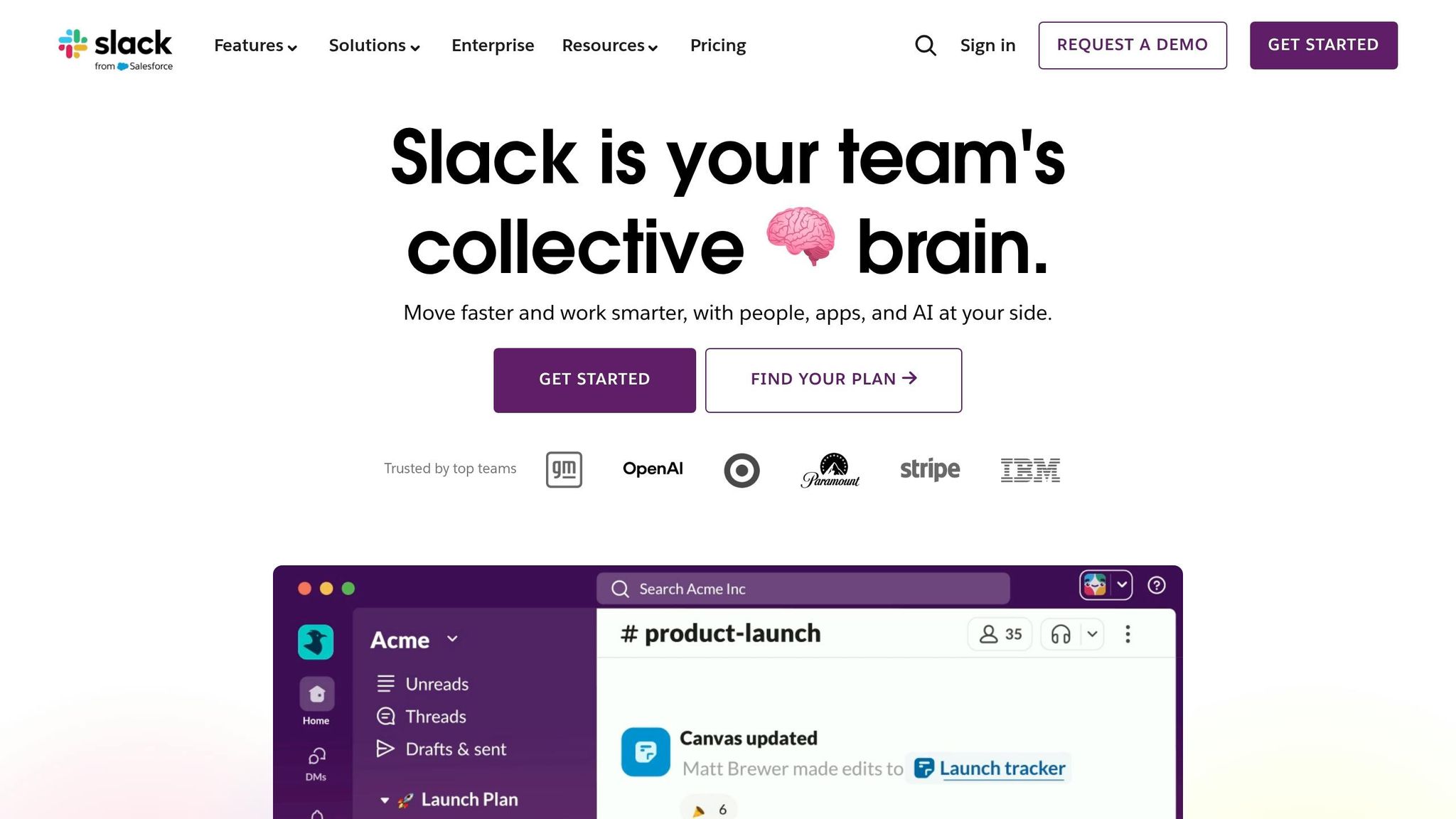
Speedy feedback is only useful if it reaches the right people at the right time. Integrating automation tools with Slack and GitHub ensures that test results are delivered instantly. For instance, when a test fails, Slack channels can receive notifications with direct links to detailed failure reports and the specific commits responsible for the issue.
GitHub integration takes this a step further by displaying inline test results directly on pull requests. Reviewers can see at a glance which tests passed or failed before merging, reducing the risk of broken code reaching production. Ranger enhances this process by combining automated test execution with human-reviewed results, delivering actionable feedback via Slack and GitHub in real-time. This ensures teams get the information they need to respond quickly and effectively.
Measuring the Impact of QA Automation on Engineering Velocity

QA Automation Impact: Key Metrics and ROI Statistics
The right metrics can reveal whether QA automation is speeding up your team or simply adding unnecessary complexity. One of the most telling metrics is deployment frequency, which tracks how often code is successfully pushed to production. In 2023, 75% of software teams reported faster deployment rates after adopting automation. Another key metric is lead time for changes, which measures the time from a code commit to production deployment. By removing manual testing bottlenecks, this lead time often decreases significantly.
Defect resolution time is equally important. Teams with high test coverage are three times more likely to fix defects within 24 hours of discovery. This is a big deal, especially since 44% of engineers say bug fixing is one of their biggest frustrations, and 52% would rather spend that time building new features. Other useful metrics include test coverage percentage and testing cycle time, both of which improve with automation. For example, parallel test execution can significantly reduce the time needed to run complete test suites.
Key Metrics to Track Before and After Automation
To measure the true impact of automation, start by establishing a two-week baseline for metrics like deployment frequency, lead time for changes, change failure rate, and pull request review time. This baseline lets you clearly see improvements over time. Elite engineering teams deploy multiple times a day, keep lead times under an hour, and maintain a change failure rate between 0–15%.
For instance, in 2024, monday.com’s engineering team (500 developers strong) implemented Qodo for AI-driven code reviews alongside QA automation. Within six months, they saw deployment frequency jump by 33% (from 12 to 16 deploys per day), lead time shrink by 34% (from 3.2 to 2.1 hours), and change failure rate drop by 37%. Similarly, a global financial services company with over 9,000 developers increased deployment frequency by 40% (from 6.2 to 8.7 deploys per day), reduced lead time by 30% (from 5.4 to 3.8 hours), and lowered their change failure rate from 16% to 11%.
"Velocity without quality isn't velocity - it's risk accumulation".
It’s critical not to focus solely on deployment frequency. If your frequency increases but your change failure rate rises too, you’re likely trading speed for risk. Tracking these baseline metrics ensures you can measure ROI accurately and avoid pitfalls.
Calculating ROI with Time Savings and Quality Improvements
To calculate ROI, use this formula: ((Benefits from Automation – Automation Costs) / Automation Costs) × 100. For time savings, the formula is: (Time for manual test – Time for automated test) × Number of tests × Number of test runs. Be sure to account for all costs, including tool licensing, training, setup, test development, and ongoing maintenance.
Here’s why this matters: fixing a defect in pre-production costs about $89, but fixing one in production jumps to $4,467, and a customer-impacting defect can cost $67,890. Avoiding even a single production issue can save 10–50 engineering hours, valued at $2,000 to $15,000 per incident. For example, manual regression testing might cost $20,000 per month (800 hours at $25/hour), while automated testing costs $2,000 (80 hours) plus $4,000 in maintenance - resulting in a net savings of $14,000 per month.
On average, QA accounts for about 23% of a company’s annual IT budget. Yet, companies typically see a 200% ROI from QA automation, gaining $2 for every $1 spent. Many automation programs aim to break even within three months, with savings compounding as test coverage expands. These measurable returns directly enhance deployment speed and quality in CI/CD pipelines.
Ranger’s AI-powered testing solution combines automated test execution with human oversight, ensuring bugs are caught before they ever reach production. This balanced approach helps teams maximize their ROI while maintaining high-quality outputs.
Conclusion
QA automation turns testing into a catalyst for faster software delivery. By reducing manual work, increasing test accuracy, and aligning seamlessly with CI/CD pipelines, it allows engineering teams to roll out features quickly without compromising on quality. Studies reveal that automation leads to more frequent deployments, shorter lead times, fewer failures, and gives developers more time to focus on innovation.
The key to maximizing these advantages lies in blending AI-driven test generation and maintenance with human oversight. This approach eliminates flaky tests and ensures reliability, providing developers with accurate feedback on real issues rather than noise.
Ranger’s AI-powered platform exemplifies this balance by managing test creation, upkeep, and infrastructure, while QA experts focus on ensuring reliability. With Ranger, teams achieve same-day releases with confidence. Jonas Bauer, Co-Founder and Engineering Lead at Upside, shared:
I definitely feel more confident releasing more frequently now than I did before Ranger. Now things are pretty confident on having things go out same day once test flows have run.
This combination of speed and precision highlights the transformative impact of QA automation across development pipelines. Teams adopting quality engineering practices stand out as high-performing, high-velocity organizations. By smartly allocating QA resources, they maintain robust test coverage without overloading developers. This shift supports continuous validation of essential workflows.
FAQs
Which tests should we automate first?
Automate tests that are frequently executed, easy to repeat, and have straightforward pass/fail criteria. Examples include regression tests, smoke tests, API and integration checks, and environment validations. By automating these, you can achieve quicker feedback loops, more consistent results, and smoother integration with CI/CD pipelines. This frees up QA teams to concentrate on risk analysis, exploratory testing, and scenarios that directly affect customers, helping to accelerate overall engineering progress.
How do we reduce flaky tests in CI?
To cut down on flaky tests in your CI pipeline, stick to proven methods like using dynamic waits rather than fixed delays, opting for stable test IDs instead of fragile CSS selectors, and ensuring each test independently handles its own data setup and teardown. Additionally, AI-driven tools such as Ranger can be a game-changer by automating test maintenance, repairing broken tests, and reducing false positives. This leads to more dependable tests and less flakiness in your workflow.
How can we measure QA automation ROI?
Measuring the ROI of QA automation involves keeping an eye on key metrics like test coverage percentage, time savings per test cycle, defect detection rates, and improvements in release frequency. To calculate ROI, you can use this formula: (Savings – Costs) / Costs × 100%. This gives you a clear picture of how much value automation is bringing to your processes.
These metrics highlight how automation can streamline workflows, save time, enhance quality, and speed up delivery cycles, making it easier to evaluate its overall impact.
Related Blog Posts
Stop babysitting your coding agents. Use Ranger
%201%20(1).svg)
More signals, less noise, faster launches
Let Ranger be your guide to sustainable QA testing.

.png)