%201.svg)
Bug Priority Calculator for Smart Fixes

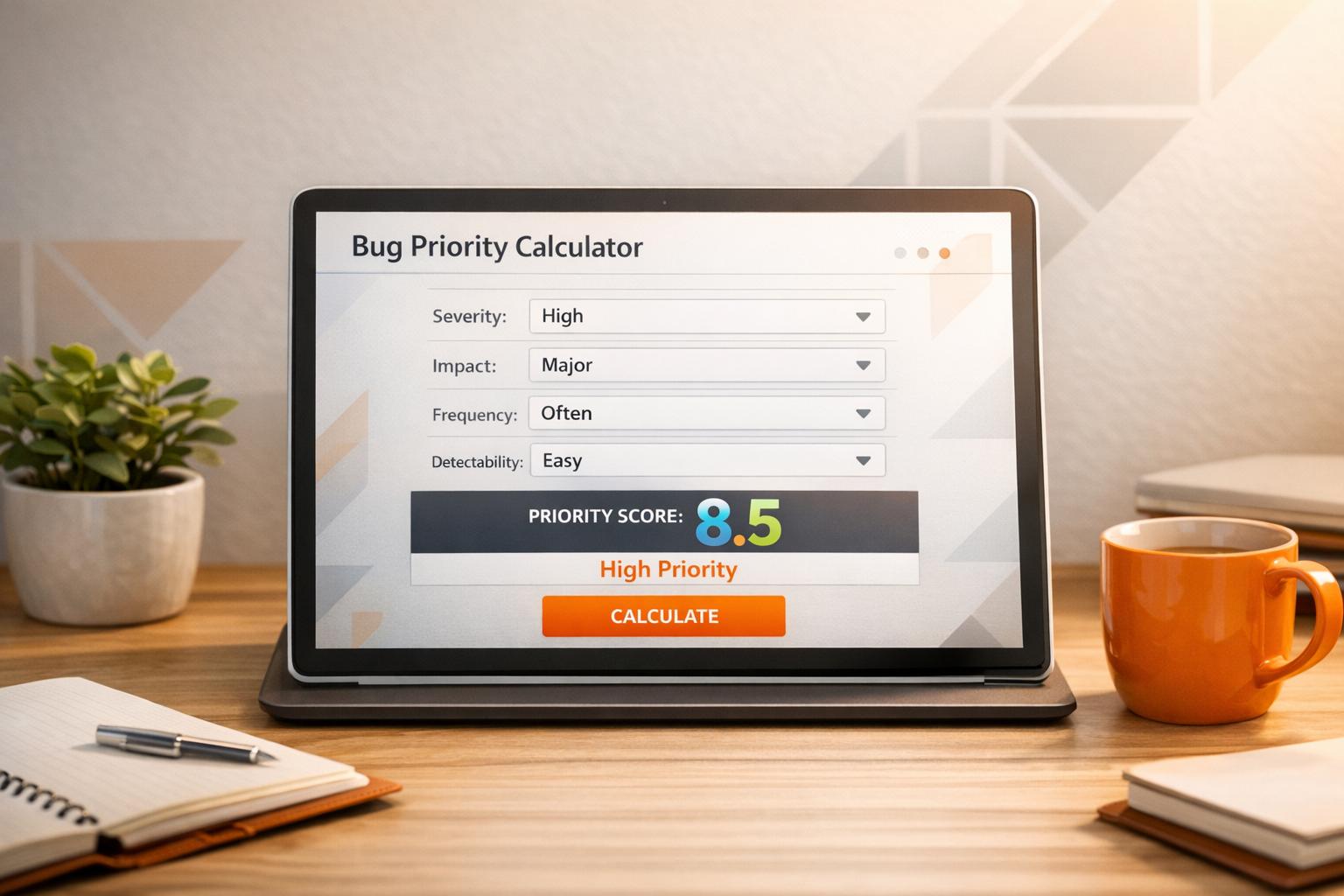
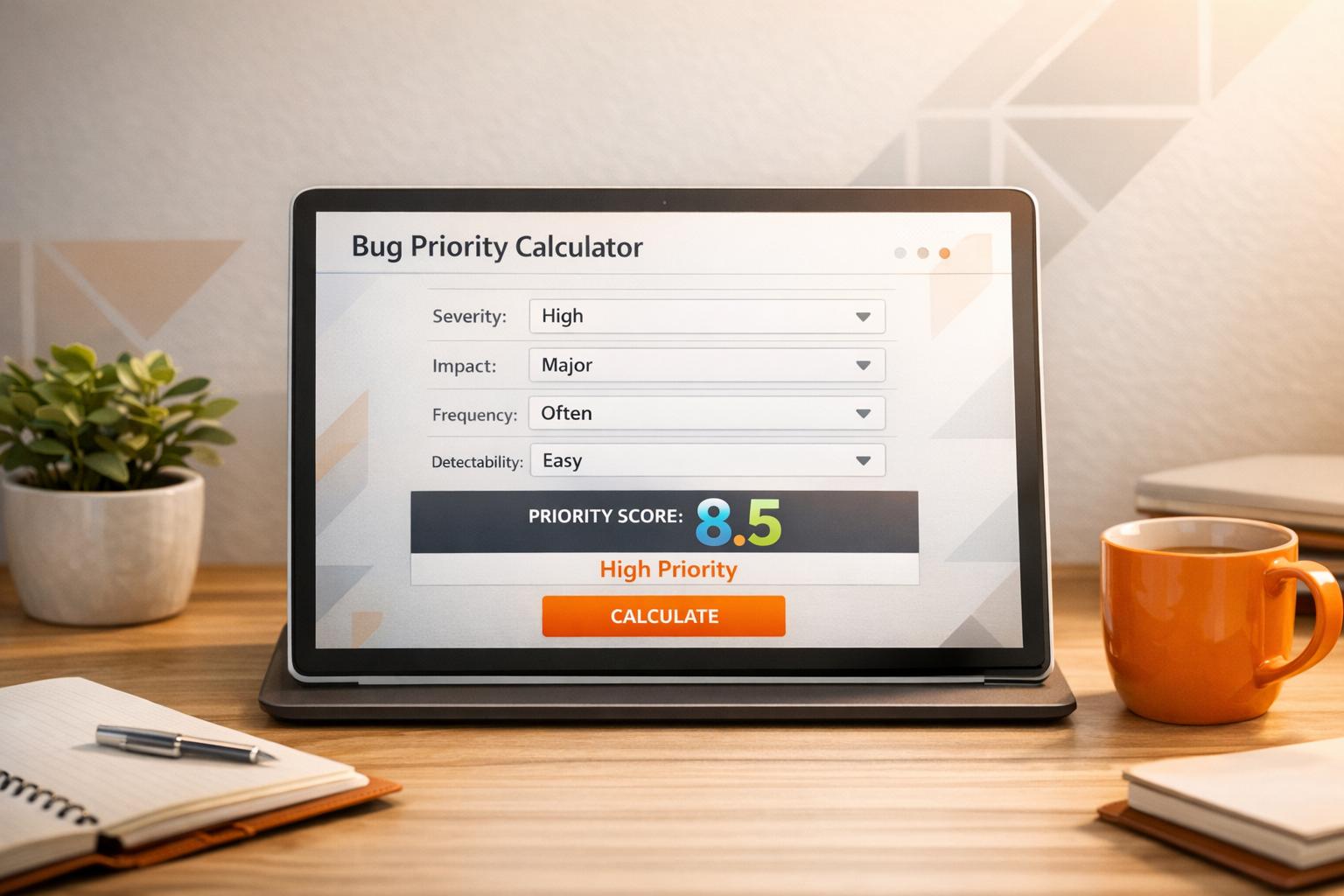
Streamline Your Workflow with a Bug Priority Tool
Managing software bugs can feel like an endless battle, especially when deadlines loom and user complaints pile up. That’s where a reliable bug prioritization system comes in handy. By focusing on the right issues at the right time, QA teams and developers can save hours of guesswork and keep projects on track.
Why Prioritizing Bugs Matters
Not every glitch is a crisis. A minor UI quirk might annoy a few users, while a critical server issue could crash the entire app. Without a clear method to rank these problems, teams risk wasting effort on low-impact fixes while major issues fester. A tool designed for bug triage takes key factors like severity, user impact, and frequency into account, delivering a logical score to guide your next steps.
Benefits for Every Team
Whether you’re a solo developer or part of a sprawling QA department, having a structured way to assess bugs boosts efficiency. It’s about working smarter—ensuring the most pressing problems get attention first. If you’ve ever struggled to decide which issue to tackle next, adopting a system for ranking software defects could be the solution you’ve been looking for.
FAQs
How does the Bug Priority Calculator determine scores?
Our tool uses a weighted scoring system. Severity and user impact carry the most weight—Critical bugs with Major impact score highest. Frequency and deadline proximity add to the total, ensuring urgent or frequent issues aren’t overlooked. The final score out of 100 places the bug into Low, Medium, High, or Critical Priority categories, with a short note explaining the result. It’s designed to be transparent and consistent!
Can I trust the priority categories for decision-making?
Absolutely. We’ve fine-tuned the logic to reflect real-world QA and dev needs. For instance, a Critical severity bug affecting many users will always rank higher than a Low severity one, even if the latter happens often. The categories—Low to Critical Priority—give you a quick snapshot, while the score offers nuance. Use it as a guide alongside your team’s judgment for the best results.
Is this tool suitable for small teams or just large ones?
It works for everyone! Small teams benefit from the clarity it brings when resources are tight—you’ll know exactly where to focus. Larger teams with complex projects can use it to standardize bug triage across departments. No matter your size, this calculator cuts through the noise and helps prioritize what’s critical to your users and deadlines.
Stop babysitting your coding agents. Use Ranger
%201%20(1).svg)
More signals, less noise, faster launches
Let Ranger be your guide to sustainable QA testing.

.png)